Betty Bomber (G4M)
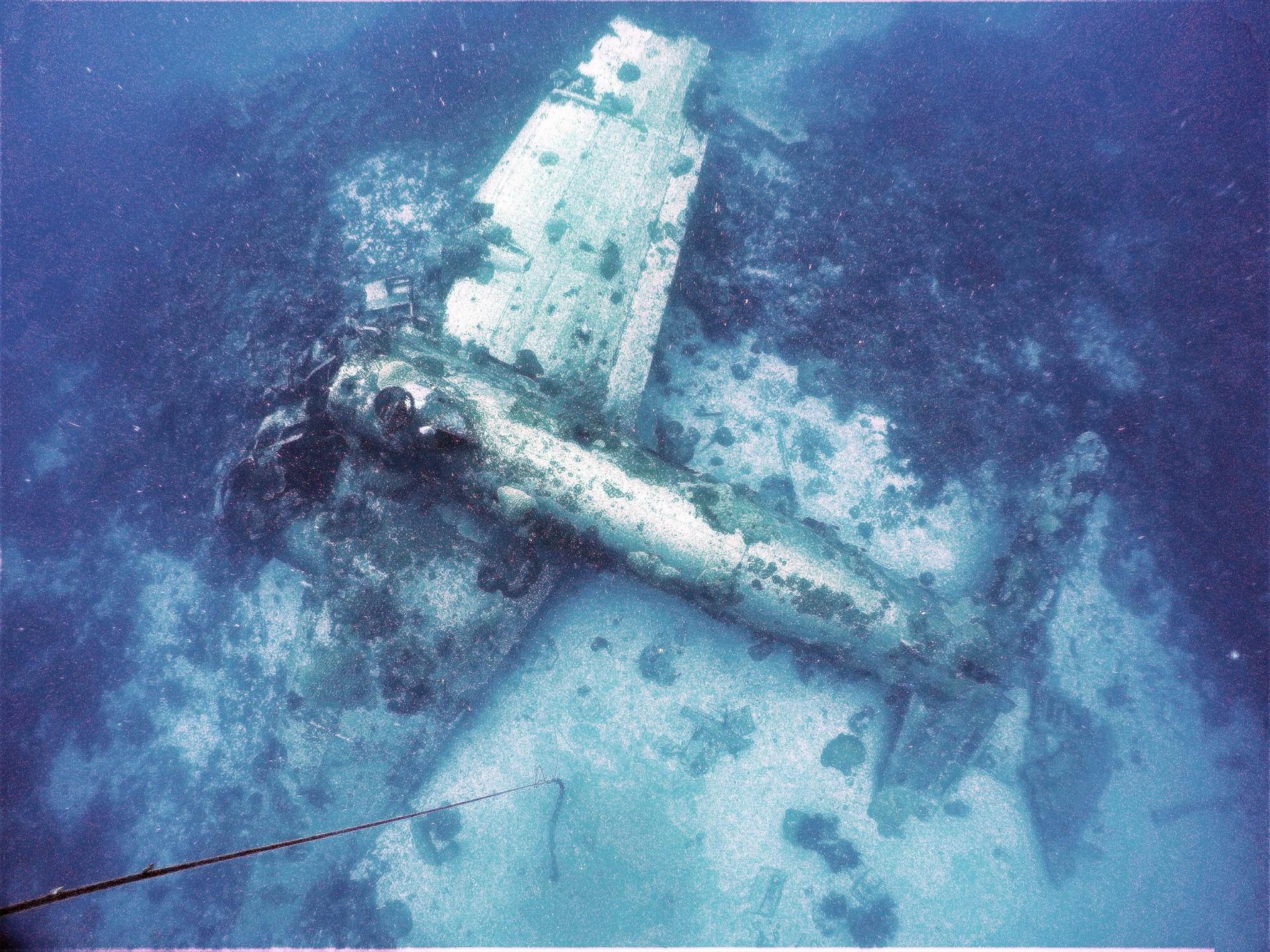
A twin-engine Japanese bomber sits upright on the sand at 15 metres, a short swim from the runway it never reached.
Among the ships of Truk Lagoon lies one of its best-loved aircraft: a Mitsubishi G4M, the navy bomber the Allies code-named Betty. It came down just short of the airstrip on Eten Island and slid onto the sand largely in one piece. Today it sits upright at around 15 metres, wings and fuselage intact, nose crushed, with its two engines lying on the seabed ahead of it. It is a short, shallow, easy dive, and a good contrast to the big ships. This guide covers what you will see, the conditions, when to go and how it fits into a Truk trip.
Quick answer: Betty Bomber (G4M) is a wwii aircraft wreck sitting upright on sand in Truk Lagoon. Best season: December to April (dry season) for the calmest seas and best visibility; diveable year-round. Level: Open Water and up; looking inside the fuselage is a short, open swim-through. Depth: About 15m (50ft) to the sand; the top of the fuselage is a few metres shallower. Typical visibility: Usually good on this shallow, sandy site; best in the dry season.
Facts verified November 2026
Why the Betty bomber is special
The Mitsubishi G4M was the Imperial Japanese Navy's main land-based attack bomber of the war, a long-range twin-engine aircraft with a crew of seven that could carry bombs or a torpedo. More than 2,400 were built. Its range came at the cost of armour and self-sealing fuel tanks, which made it easy to set alight and earned it the Allied nickname 'flying lighter'. This one crashed into the lagoon just short of the runway on Eten Island, where the Japanese had laid a single concrete runway along the length of the island. When it came down, and why, is not recorded: it may have been shot down on approach, or it may simply have landed short.
What makes it special is how much of it survived. It hit the water low and slow, did not break up, and slid to the bottom almost whole. The engines tore away and came to rest some distance in front of the wreck, the nose crumpled, but the wings and fuselage are there, and you can still look into the cockpit and gun positions.
What you'll see on the wreck
The whole aircraft fits into a single dive with time to spare, and the clear water lets you see it from every angle. Things to look for:
- The fuselage and wings, upright and intact on the sand
- The crushed nose, with the pilot's position still reachable, and the pilot's seat lying on the sand nearby
- The open fuselage interior, with machine-gun parts, radio parts and small boxes
- The two engines lying on the seabed ahead of the wreck, where they came to rest after tearing free
- Scattered airframe parts and coral outcrops around the site
Look, don't take
Over the years divers have carried away a good deal from inside the aircraft, which is why there is less to see now than there once was. Taking anything from the Truk wrecks is illegal. At one point 38 incendiary bombs were removed from the bomber to make it safe for divers; treat any ordnance you see anywhere in the lagoon as live, and leave every object where it lies.
Conditions and who it's for
This is the easiest of the well-known Truk wrecks. At about 15 metres on sand, with little or no current and water at 28 to 30°C all year, it suits Open Water divers, makes a good first dive of a trip to check your weighting and buoyancy, and gives a relaxed break between deep ship dives. You don't need nitrox here.
Coral does not grow well on the aluminium, so the airframe looks cleaner than the steel ships, and with the light this shallow it is a good site for wide-angle photography. If you look inside, the fuselage is open and short, but it is still an overhead space: go in only if you are comfortable, and keep clear of sharp, corroded edges.
When to dive it
Truk Lagoon is diveable year-round. The drier months from about December to April usually bring the calmest seas and the clearest water; June to November is wetter and more variable, and August to November carries the most typhoon risk, although the lagoon shelters its dive sites from swell.
Being shallow and on sand, the Betty is a good dive in any season, and it is often used on the first day of a trip or when the weather makes the longer runs less appealing.
How you dive the Betty bomber
Most Truk trips fit the Betty in early, as a checkout or a shallow dive between bigger wrecks. Circle the aircraft once from above to see the whole shape, drop down to look into the nose and fuselage, then swim forward to find the engines on the sand before heading back.
Because it is shallow, you can take your time: a long, easy dive here is also a good way to offgas after a deep wreck earlier in the day.
We sell 8 to 10-night Truk Lagoon liveaboards that board off Weno, and the Betty bomber is one of the lagoon's regular stops. The day-by-day dive plan is set on board around conditions and the group, so if you want to see it, tell us when you book. It is a shallow, easy dive that suits every level on board, and a good one for the first day while you settle your weighting.
Betty Bomber (G4M): common questions
What is the best season to dive Betty Bomber (G4M)?
December to April (dry season) for the calmest seas and best visibility; diveable year-round
What experience level do I need for Betty Bomber (G4M)?
Open Water and up; looking inside the fuselage is a short, open swim-through
How deep is Betty Bomber (G4M)?
About 15m (50ft) to the sand; the top of the fuselage is a few metres shallower
What marine life will I see at Betty Bomber (G4M)?
Little growth on the aluminium airframe itself; coral outcrops and reef fish around it on the sand