Palau: The Underwater Wonderland
Some destinations need caveats. Palau doesn't. It's spectacular. It's protected. It has sharks patrolling channels like bouncers at the world's best club. And that jellyfish lake thing? Real. Surreal, but real.
If you've been waiting for a sign to book Palau, this is it.
Why Palau Is Different
Palau got smart early. While other destinations were still debating whether shark finning was "that bad," Palau created the world's first shark sanctuary. No fishing. No finning. No negotiation.
The result? Sharks everywhere. Healthy reef systems. Marine life that hasn't been pressured into hiding. It's what diving should feel like.
The Legendary Sites
Blue Corner
The site that made Palau famous. A submerged plateau where currents converge, bringing in... everything. Grey reef sharks patrolling in packs. Schools of barracuda so dense they block the sun. Napoleon wrasses the size of small cars.
Pro tip: This is reef hook territory. Clip in, go neutral, and watch the show.
German Channel
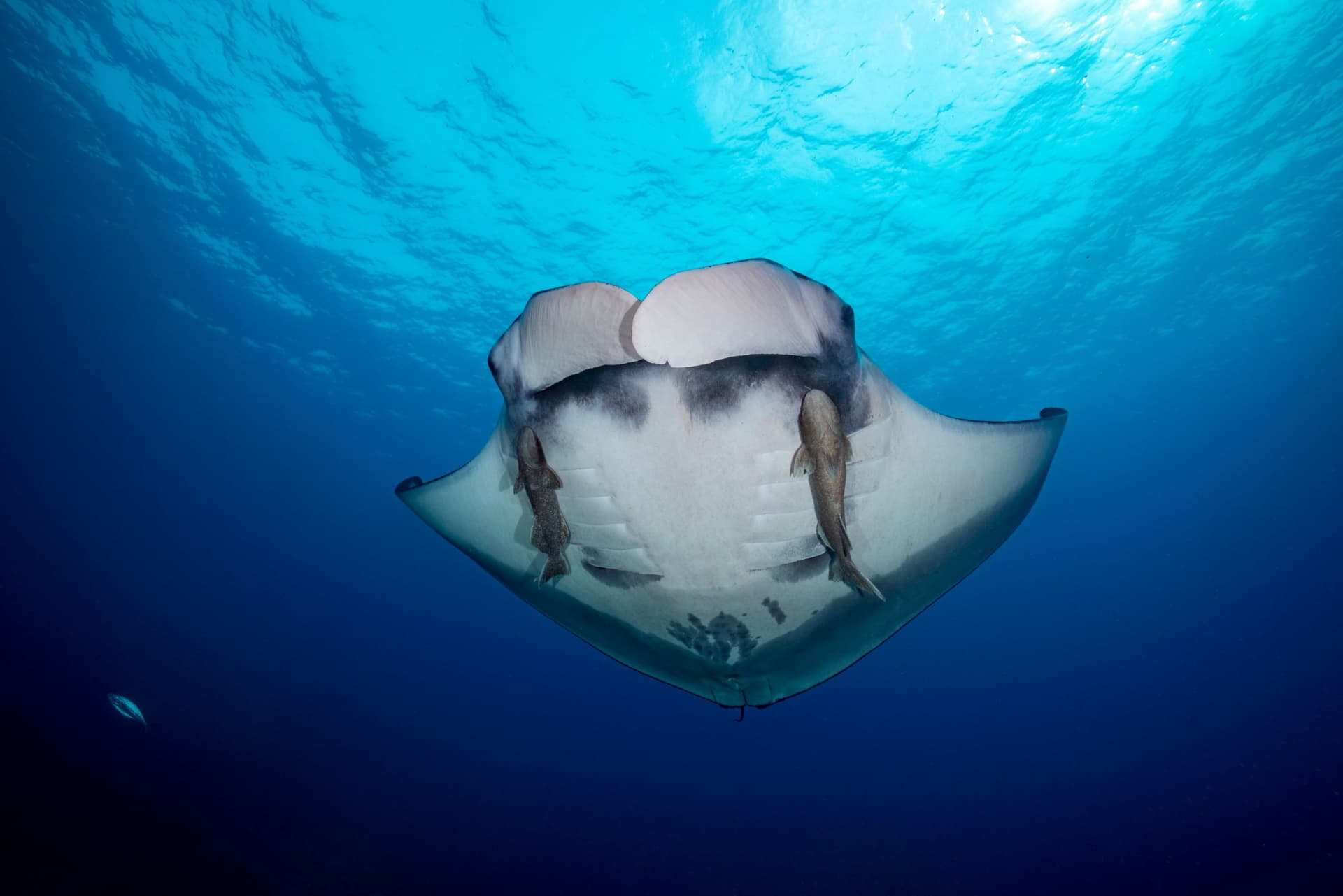
Manta central. Built artificially by German miners a century ago, this channel created the perfect manta cleaning station. On a good day, you'll see dozens gliding in for their spa treatment.
Best time: Early morning dives when the mantas are most active.
Jellyfish Lake
Not a dive (snorkel only, to protect the ecosystem), but absolutely unmissable. A marine lake filled with millions of golden jellyfish that have evolved without stingers. Swimming through them at sunrise is about as close to a religious experience as diving gets.
WWII Wrecks
Palau saw heavy fighting in WWII, and the seafloor holds the evidence. Planes, ships, tanks — all now encrusted with coral and teeming with life. History buffs and wreck divers will need multiple trips.
The Practical Stuff
When to go: Year-round, but October through May is generally drier and calmer.
Water temperature: 28-30°C. You can get away with a 3mm or rashguard.
Visibility: Often 30+ meters. Sometimes you can see tomorrow.
Currents: Variable and sometimes strong. Blue Corner in particular can be washing-machine intense. Experience required.
The Conservation Commitment
Diving in Palau comes with a pledge — literally. You'll sign the Palau Pledge stamped into your passport, promising to act responsibly and protect the environment.
It's not a gimmick. Palau takes this seriously, and as divers, we should too.
Liveaboard vs. Land-Based
Palau works both ways. Land-based from Koror gives you access to most sites, and the infrastructure is solid.
Liveaboards let you hit the outer sites and atolls with less transit time, and the night dives at anchor are special.
Our take: If you have a week, liveaboard. If you have less, land-based is efficient.
The Verdict
Palau isn't the cheapest destination. It's remote, and getting there takes effort.
But for sheer density of marine life, variety of experiences (channels! mantas! wrecks! jellyfish!), and the satisfaction of supporting one of the world's most conservation-forward destinations? It's hard to beat.
Want to experience Palau's magic? Our concierge can help you plan the perfect trip — liveaboard or land-based, we've got you covered.
- Palau: Best Dive Sites and When to Go — Detailed site-by-site breakdown and seasonal planning
- Best Time to Dive: A Season-by-Season Guide — When to visit Palau and other top destinations
- How to Choose the Right Liveaboard for Your Level — Finding the right boat for Palau's varied conditions
Related Articles
%20-%20Large.jpg&w=828&q=75)
Best Time to Dive: A Season-by-Season Guide
When to visit the world's top liveaboard destinations for the best conditions and marine life encounters.
Galápagos Diving: What to Expect on Your First Trip
Hammerhead highways, curious sea lions, and currents that demand respect — here's what awaits in the enchanted islands.