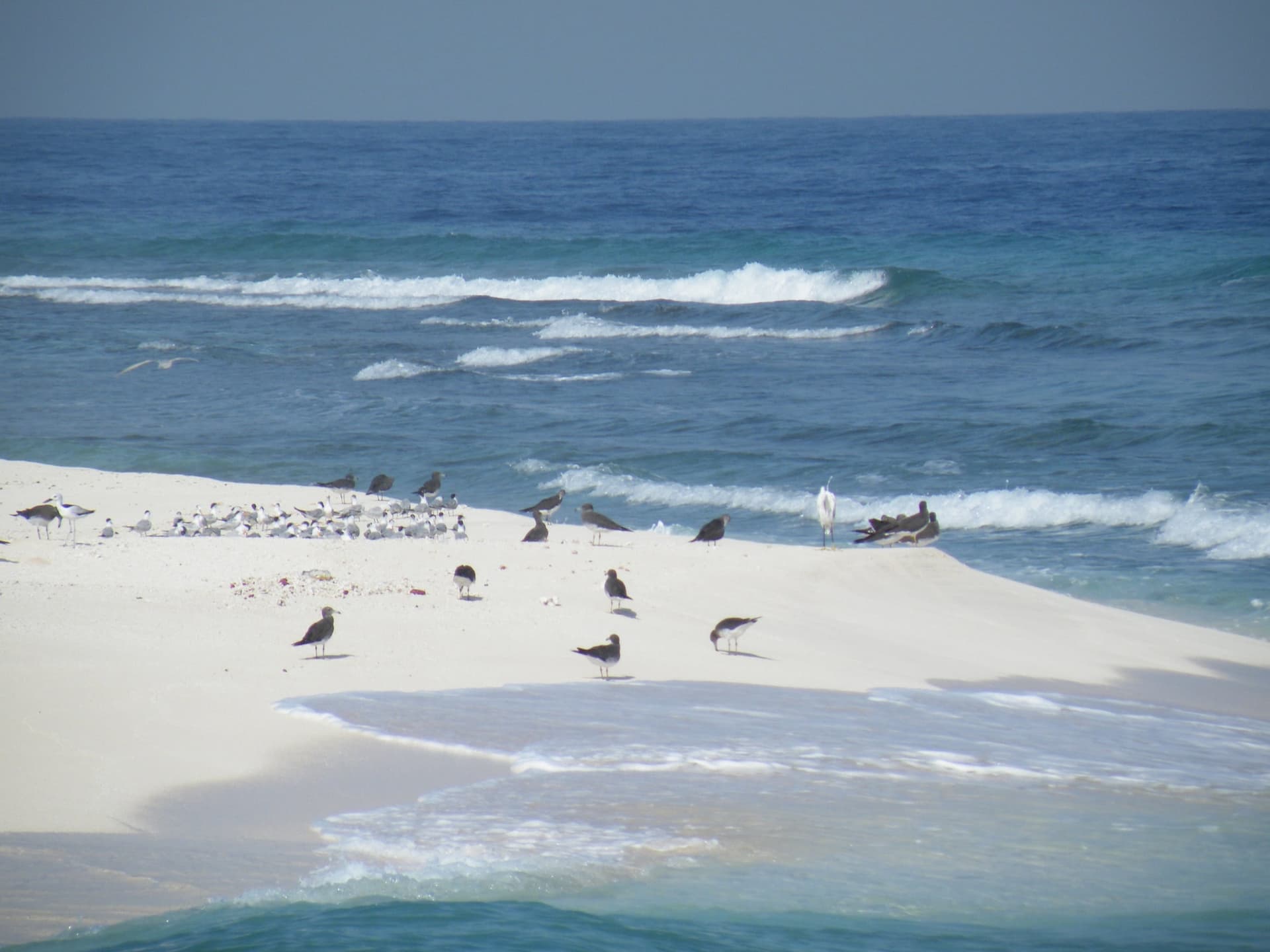
Mar Mar Island
A dramatic drop-off, coral in near-perfect health, and a calm anchorage under a sky with no light on the horizon — Mar Mar Island is the Saudi Red Sea still finding its own reputation.
Out in the Farasan Banks, a day's steam south of Al Lith, Mar Mar Island diving delivers the two things that make a good liveaboard stop: a wall worth the whole trip and shelter worth the whole night. The reef flats hum with fish, the hard coral is the kind you rarely see on more trafficked reefs, and the drop-off falls away into deep blue where the bigger animals patrol. This is frontier diving in Saudi Arabia — permit-controlled, seasonal and quiet — and Mar Mar is one of its most rewarding anchorages.
Quick answer: Mar Mar Island is a wall / drop-off, reef flat, liveaboard in Saudi Arabia. Best season: October to May; spring (March–May) best for pelagic action. Level: Advanced (AOWD recommended); calmer reef-flat sections suit confident intermediates. Depth: Reef flats from 5m; the wall drops well past recreational limits, most diving 12–30m. Typical visibility: Typically 20–30m, often 30m-plus in clear spells.
Facts verified September 2026
What makes Mar Mar Island special
Most divers come to the Farasan Banks for the big blue-water sites — Twenty Miles, the gorgonian reefs, the offshore pinnacles. Mar Mar earns its place for a quieter reason: it does two jobs at once. Drop in on the exposed side and you get a genuine wall, a coral-plastered face that falls away into open water and gives every dive that edge-of-the-map feeling. Come round to the lee and the reef flat spreads out shallow and bright, and the island itself blocks the swell enough to give the boat a still, dark anchorage for the night.
What sets it apart underwater is the condition of the coral. This corner of the Saudi Red Sea sees a fraction of the traffic that Egypt's reefs absorb every week, and it shows — hard coral gardens grown in without broken fans or bleached patches, table corals stacked like dinner plates, the reef doing exactly what a healthy reef should. You are diving something close to a baseline, and that is rare.
What you'll see diving Mar Mar Island
The wall and reef flats carry the everyday richness the southern Red Sea is known for: clouds of anthias over the coral, fusiliers streaming along the drop-off, snapper and surgeonfish working the shallows, and the usual cast of angelfish, butterflyfish, parrotfish and moray tucked into the structure. Turtles are a common sight over the flats, and reef sharks — whitetip and blacktip — patrol the deeper edge of the wall.
The Farasan Banks are pelagic country, and the drop-off is where you watch for it. Scalloped hammerheads move through this region, tuna and barracuda hunt the blue, and in the right season mantas and even whale sharks pass along these banks. None of that is guaranteed on any single dive at Mar Mar — this is open ocean, and the animals owe you nothing — but the deep water beside the wall is exactly the kind of edge they favour, so you keep one eye out into the blue.
Away from the drama, the shallow flats reward slow diving. This is prime macro and coral-detail territory: nudibranchs, shrimp gobies, anemonefish and the small stuff that a fast wall dive skims straight past.
Conditions and who Mar Mar Island is for
Mar Mar is best treated as an advanced dive. Operators here generally ask for an Advanced Open Water certification or equivalent, keeping recreational diving to around 30m. The wall itself continues far deeper, so good buoyancy, honest depth and gas discipline, and comfort diving a drop-off with the bottom out of sight all matter more here than at a sheltered reef.
Current is the variable to plan around. The anchorage side is often mild, but the exposed wall can run stronger and noticeably cooler, and conditions shift with wind and tide — your guide's briefing is the final word, not this page. Visibility is generally excellent, commonly 20–30m and better in clear spells, in water that sits in the comfortable low-to-mid 20s Celsius through the diving season.
Be honest with yourself about the setting more than the site. Diving Saudi Arabia is an emerging, permit-based frontier: itineraries run under government-controlled access, the reefs are remote, and there is no chain of dive centres or recompression cover a short boat ride away. That remoteness is the appeal — but it asks for self-sufficient, current-comfortable divers, not first-timers.
When to dive it
The Farasan Banks season runs roughly October to May, when water temperatures are comfortable and the weather settles enough for the long offshore steams. Peak time depends on what you are chasing.
Spring — March through May — tends to bring the most reliable pelagic action across the banks, when the bigger animals are moving and blue-water encounters pick up. The cooler heart of winter can serve up stronger winds and bigger surface conditions offshore, which is one more reason a sheltered stop like Mar Mar earns its keep on the schedule. Summer is effectively off-season here: hot, and outside the standard liveaboard operating window.
How you actually dive Mar Mar Island
There is no shore access and no day-boat option — Mar Mar is reached only by liveaboard on a Farasan Banks itinerary, typically sailing from Al Lith after an internal transfer from Jeddah. Because access is permit-controlled and the region is still lightly visited, trips run on a limited calendar and berths are booked well ahead.
On site you dive it as a drift-and-return along the wall or a relaxed exploration of the reef flat, run from the liveaboard's tenders or directly off the back deck. A common rhythm is to work the drop-off on the day dives — watching the blue on descent — then use the lee of the island for a gentle final dive and the overnight anchorage. It is the sort of stop that rounds out a Farasan Banks trip: a strong dive by day, still water by night, and dark enough overhead that the stars do the rest.
Faneca dives Mar Mar Island on our Saudi Arabia Red Sea liveaboards through the Farasan Banks, sailing from Al Lith in the October-to-May window. These are permit-based expeditions on a limited calendar and best suited to advanced, current-comfortable divers, so talk to us early about dates, certification and what the season is likely to deliver.
Mar Mar Island: common questions
What is the best season to dive Mar Mar Island?
October to May; spring (March–May) best for pelagic action
What experience level do I need for Mar Mar Island?
Advanced (AOWD recommended); calmer reef-flat sections suit confident intermediates
How deep is Mar Mar Island?
Reef flats from 5m; the wall drops well past recreational limits, most diving 12–30m
What marine life will I see at Mar Mar Island?
Pristine hard coral, dense reef fish, reef sharks, turtles; passing pelagics — hammerheads, tuna, occasional manta and whale shark in season
