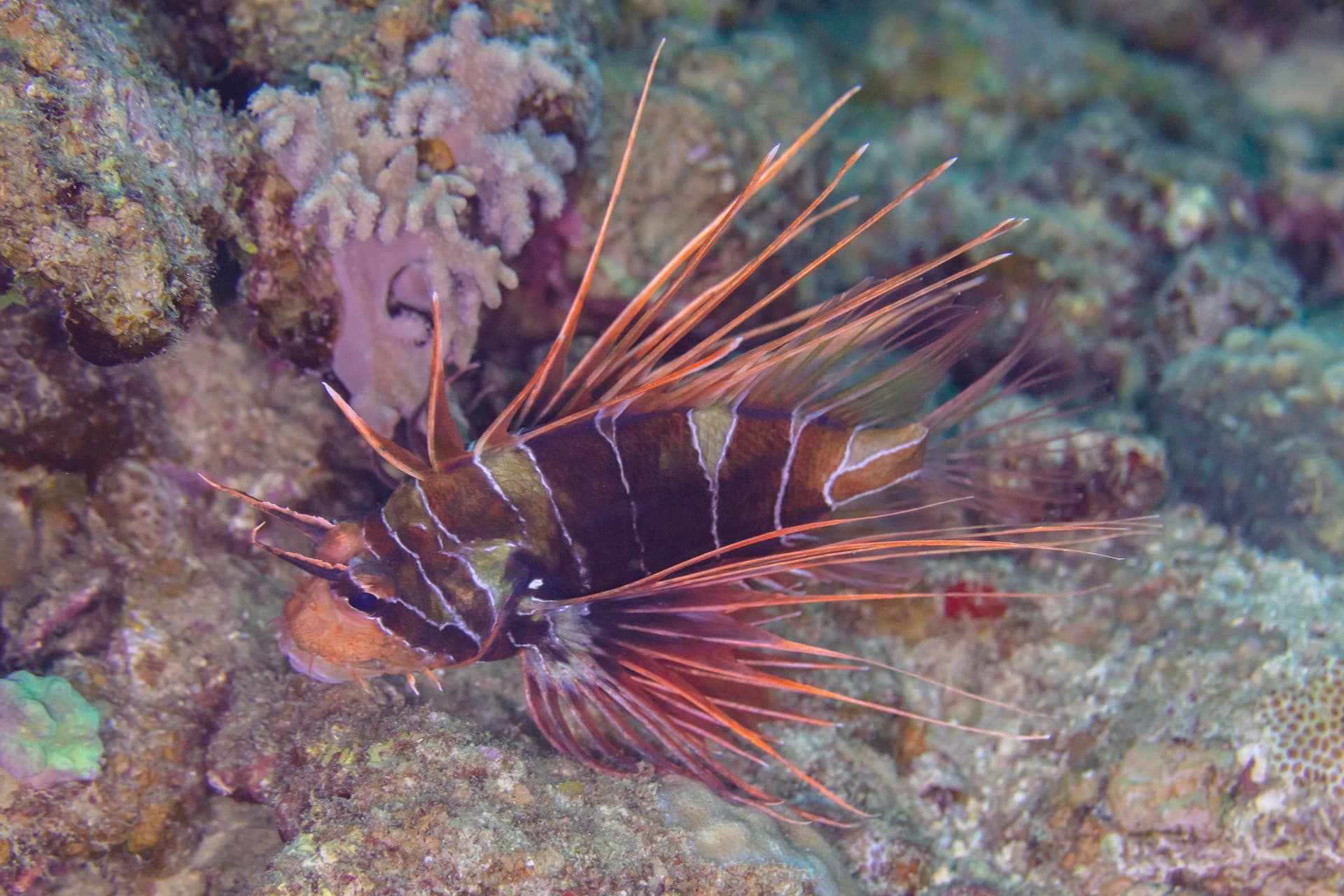
Gorgonia Reef
Sea fans the size of doorways, and a wall of barracuda in the blue behind them.
Gorgonia Reef is the kind of offshore pinnacle that made people start talking about diving in Saudi Arabia. Gorgonian sea fans drape the walls, the current pulls schooling barracuda, tuna and jacks in off the blue, and there is almost never another boat in sight. It is a straightforward, rewarding reef dive in one of the least-dived corners of the Red Sea — reachable only by liveaboard, and only with the right permits in hand.
Quick answer: Gorgonia Reef is an offshore pinnacle / reef dive, often as a drift in Saudi Arabia. Best season: Roughly November to May, when the water is cooler and pelagic action peaks. Level: Intermediate — comfortable in mild-to-moderate current and open water. Depth: Reef top around 8-12 m, sloping walls to 30 m and beyond into the blue. Typical visibility: Typically 20-30 m, often more offshore.
Facts verified September 2026
What makes Gorgonia Reef special
The reef is named for what covers it. Gorgonian sea fans grow thickest where the current runs, and here they fan out across the walls in overlapping layers — some of them wide enough to swim through, angled into the flow to feed. On a good day, with the sun behind you, the whole slope looks like it has been hung with tapestries.
But the fans are only half the story. Gorgonia Reef rises from deep water as an isolated offshore pinnacle, which is exactly the kind of structure that concentrates life. The reef itself is a garden of hard and soft coral in strong health — this is frontier reef, largely untouched by the diver traffic that has worn other parts of the Red Sea — and the surrounding blue is where the big fish stack up. That combination of intact coral and reliable pelagic action, with no crowds, is what keeps this site on Saudi liveaboard itineraries.
What you'll see underwater
Start with the sea fans. They cluster on the current-facing walls between roughly 15 and 30 metres, often sheltering longnose hawkfish and crinoids, with anthias hazing the reef above them and glassfish packing the overhangs.
Then turn and look into the blue. Barracuda are the signature here — long silver schools that hang in the current and slowly wheel as you approach. Tuna cruise through in fast, muscular passes, and jacks and trevally ball up bait against the reef, sometimes hunting right in front of you. Snapper and fusiliers move in clouds over the coral, reef sharks patrol the deeper slope, and turtles are a regular sight. In the cooler months the odds of something larger passing through — a bigger shark, the occasional pelagic straggler off the open water — go up noticeably. You are diving an emerging region, so the wildlife still behaves as if it has rarely seen divers, which is a large part of the appeal.
Conditions and who it's for
Gorgonia Reef is an intermediate dive rather than a technical one. There is no wreck, no overhead, no decompression obligation built into the plan — the depth you take is the depth you choose, and most of the best action sits comfortably within recreational limits along the wall and reef top.
What you do need is confidence in open water and moving water. As an exposed offshore pinnacle, the site catches current: usually mild to moderate, occasionally stronger on the corners, and often best dived as a drift. Good buoyancy matters, both to hold position in the flow while you watch the barracuda and to keep well off the fragile sea fans. Visibility is typically 20 to 30 metres and frequently better offshore, and water temperatures run from the low-to-mid 20s Celsius in winter up towards the high 20s in the warmer months.
The honest headline is access. Saudi Arabia is an emerging, permit-based diving frontier. The reefs are opening up slowly and under tight control — dive permits, marine-park rules and vessel authorisations are all required, very few liveaboards operate here, and itineraries can shift with permissions and weather. This is not somewhere you turn up and dive independently. It is a guided, expedition-style trip, and the reward for the extra logistics is reef that most divers will never get to see.
When to dive Gorgonia Reef
The prime window is roughly November to May. Through the cooler months the water drops a few degrees, and that cooler, more productive water is what pulls the pelagics in — barracuda, tuna and jacks are most reliable then, and it is also the broader season when the Saudi Red Sea sees its best big-animal action further south.
The summer months are diveable, with warm, calm water and long visibility, but the pelagic energy eases off and the surface conditions can be hot and still. If you are travelling this far for the schooling fish and the chance of something big in the blue, aim for winter or spring, and treat exact dates as weather- and permit-dependent rather than fixed.
How you actually dive it
Expect a negative or prompt descent onto the pinnacle, dropping down the current-facing wall where the sea fans are densest and the fish tend to gather. The standard plan is to work the deeper wall early, spend time hanging at the corner watching the blue for barracuda and tuna, then drift up and around onto the reef top to offgas among the coral and glassfish while your computer catches up.
Because this is a liveaboard-only site with no shore backup, briefings, entries and pickups are run tightly off the tenders — stay with your buddy, listen to the guide's read on the current, and carry an SMB, as drifting off the pinnacle into open water is a real possibility. Keep a little gas in reserve for a slow, fan-lined ascent; the shallows here are as photogenic as the depths, and there is rarely any reason to rush back to the boat.
Faneca dives Gorgonia Reef on our Saudi Arabia Red Sea liveaboards, which run this emerging, permit-controlled frontier mainly in the cooler November-to-May window; because Saudi diving is still opening up under tight authorisation, sailings are limited and itineraries flex with permits and weather, and you will want solid open-water and mild-current experience before you join.
Gorgonia Reef: common questions
What is the best season to dive Gorgonia Reef?
Roughly November to May, when the water is cooler and pelagic action peaks
What experience level do I need for Gorgonia Reef?
Intermediate — comfortable in mild-to-moderate current and open water
How deep is Gorgonia Reef?
Reef top around 8-12 m, sloping walls to 30 m and beyond into the blue
What marine life will I see at Gorgonia Reef?
Gorgonian sea fans, barracuda, tuna, jacks and trevally, snapper, reef sharks, turtles, occasional pelagics
