Fahal Island
A limestone island 20 minutes off Muscat where reef sharks rest on the sand and a limestone arch pulls you through the rock.
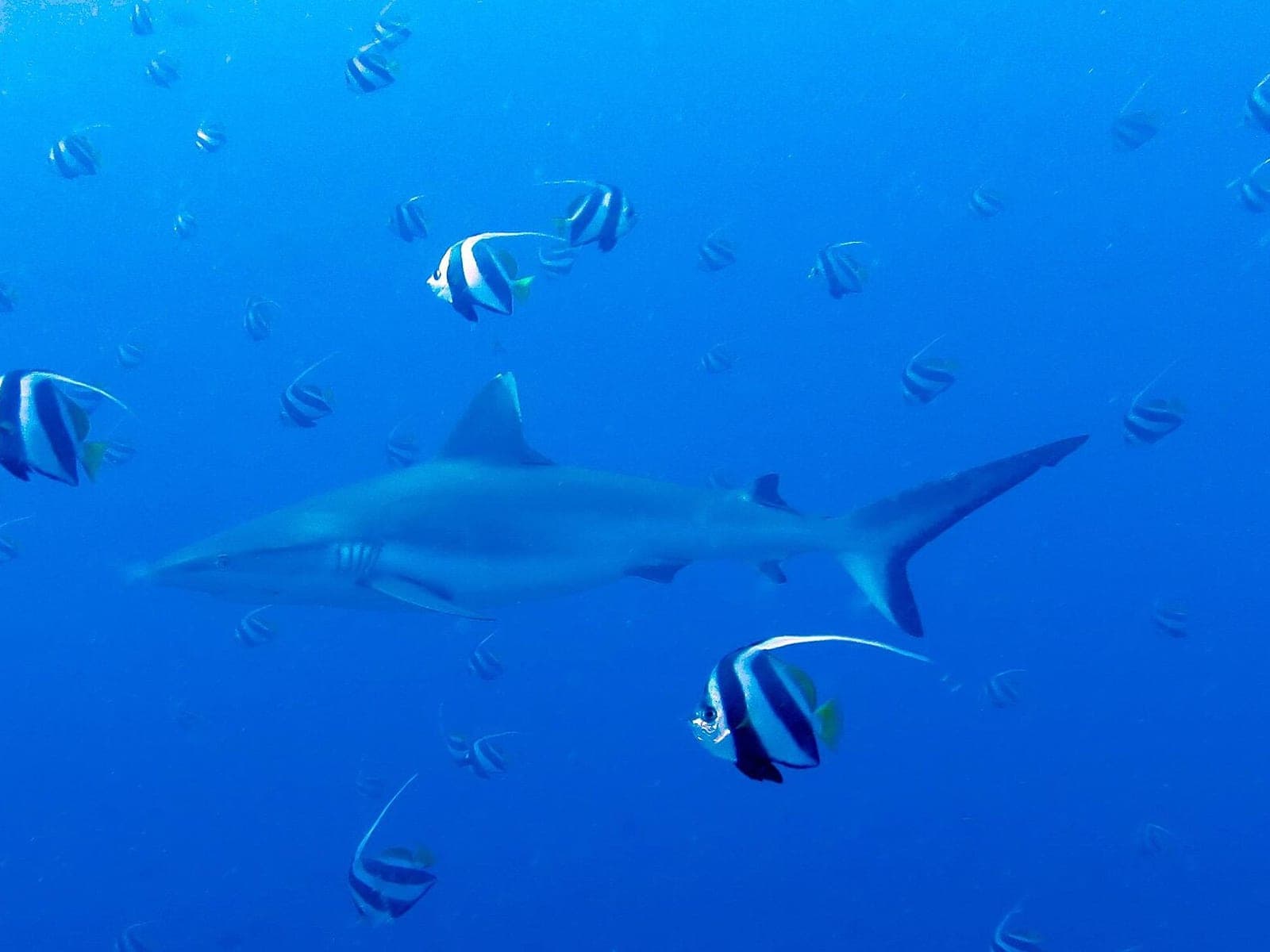
Locals call it Shark Island, and Fahal Island diving lives up to the name without any of the theatre. This fossilised limestone outcrop sits close enough to Muscat to be a relaxed half-day boat trip, yet it packs more variety into one small island than sites twice its size: shallow coral gardens for your first breaths of the Gulf of Oman, an L-shaped cavern and arch for the confident, a tug and barge resting in 30 metres, and deep reefs that keep dropping past 40. Sharks laze on the sandbanks, eagle rays glide the blue, and barracuda hang in the current lines. It is the anchor site of any Oman liveaboard or day-boat week out of the capital, and one of the easiest world-class dives you will ever reach.
Quick answer: Fahal Island is a day-boat and liveaboard reef, wall, cavern swim-through and wreck dives in Oman. Best season: October–May for settled diving; September–November best for whale sharks. Level: Open Water and up on the shallow sides; Advanced/experienced for the cave, wreck and deep reefs. Depth: 5–40 m+ (shallow reefs from 5 m; wreck at ~30 m; deep reef beyond 40 m). Typical visibility: Variable, typically 8–20 m, up to ~30 m on the clearest days.
Facts verified September 2026
Why Fahal Island is special
Most dive destinations make you choose between easy and interesting. Fahal Island refuses to. The island itself is a 55-to-35-million-year-old block of Eocene limestone, three worn pinnacles breaking the surface, and each face of it offers a different dive. One side is a healthy coral garden where turtles graze and eagle rays cruise; another is a soft-coral wall; the points fall away into deeper water where the current and the bigger animals gather.
What sets it apart from the rest of Oman's Muscat-area diving is the swim-through. A dramatic L-shaped cavern cuts into the limestone, opening into an arch you pass beneath with the reef closing overhead and light pouring back in on the far side. It is the kind of feature divers travel for, sitting less than half an hour from a major city. Add a tug and barge on the sand and you have wreck, cavern, wall and reef on a single small island.
What you'll see
The nickname is earned. Fahal's shallow sandbanks are where sharks come to rest, and on a good day you drift over them lying motionless on the sand. Sightings are never guaranteed, but the cast here is genuinely varied.
- Sharks resting on the sandbanks — nurse sharks, plus whitetip, blacktip and grey reef sharks
- Eagle rays and mobula rays gliding past the deeper points
- Green and hawksbill turtles over the coral gardens
- Schooling barracuda and dense clouds of reef fish in the current lines
- All 39 of Oman's hard and soft coral species — one of the richest coral spreads in the country
- Whale sharks in season (roughly September–November), feeding on the plankton blooms
Conditions and who it's for
This is one of the most forgiving world-class sites you will dive, which is exactly why it works for mixed-ability groups. The shallow reefs on the sheltered sides sit in 5 to 18 metres with usually gentle current — comfortable Open Water territory and superb for a checkout dive or a snorkeller tagging along on the boat.
Be honest with yourself about the rest. The cavern and arch are overhead environment: they demand good buoyancy, a light and, ideally, proper cavern training, and they are not a place to be learning trim. The wreck sits around 30 metres and the deep reef drops past 40, both firmly Advanced dives with real deco and gas considerations. Current can pick up on the exposed North and South points. Visibility is the honest variable here — it can be a glorious 30 metres, but 8 to 15 is more typical, and plankton-rich water that brings the whale sharks also cuts the clarity. Come for the life and the topography, not for gin-clear water every day.
When to dive Fahal Island
The main Muscat diving season runs roughly October to May, when the northern Gulf of Oman is settled and the north side of the island is reliably diveable. Water sits comfortably in the mid-20s Celsius through spring and autumn and climbs past 30 in high summer — a 3mm suit is plenty for most, and some divers skin-dive it in the hot months.
For clarity, target April–May or the autumn shoulder. For the headline encounter, September to November is the window when whale sharks are most likely, though they follow the plankton and no month promises them. Midsummer is dive-able but hot topside and often greener underwater; winter can bring rougher surface conditions that shut the exposed sides down.
How you actually dive it
Fahal is a boat dive, and a short one. It sits only about 4 kilometres off the Muscat coast, so it is 20 to 40 minutes from the dive centres and marinas along the capital's shoreline — an easy morning of two dives with a surface interval bobbing in the lee of the island.
You do not need a liveaboard to reach it; day boats run it constantly, which is part of its charm. That said, Fahal pairs naturally with the Daymaniyat Islands further up the coast, so many divers build it into a multi-day Muscat itinerary rather than treating it as a one-off. Plan your dives around the swim-through and the wreck for the experienced members of the group and the coral gardens for everyone else, and you cover the whole island in a couple of relaxed days.
Faneca dives Fahal Island on our Oman diving trips as a day-boat run out of Muscat, usually paired with the Daymaniyat Islands over a few days — it is genuinely accessible with no liveaboard required, and we time departures for the October–May season when the north side is settled and the sharks and rays are most active.
Fahal Island: common questions
What is the best season to dive Fahal Island?
October–May for settled diving; September–November best for whale sharks
What experience level do I need for Fahal Island?
Open Water and up on the shallow sides; Advanced/experienced for the cave, wreck and deep reefs
How deep is Fahal Island?
5–40 m+ (shallow reefs from 5 m; wreck at ~30 m; deep reef beyond 40 m)
What marine life will I see at Fahal Island?
Reef sharks and nurse sharks on the sandbanks, eagle and mobula rays, barracuda, turtles, all 39 of Oman's coral species; whale sharks in season
