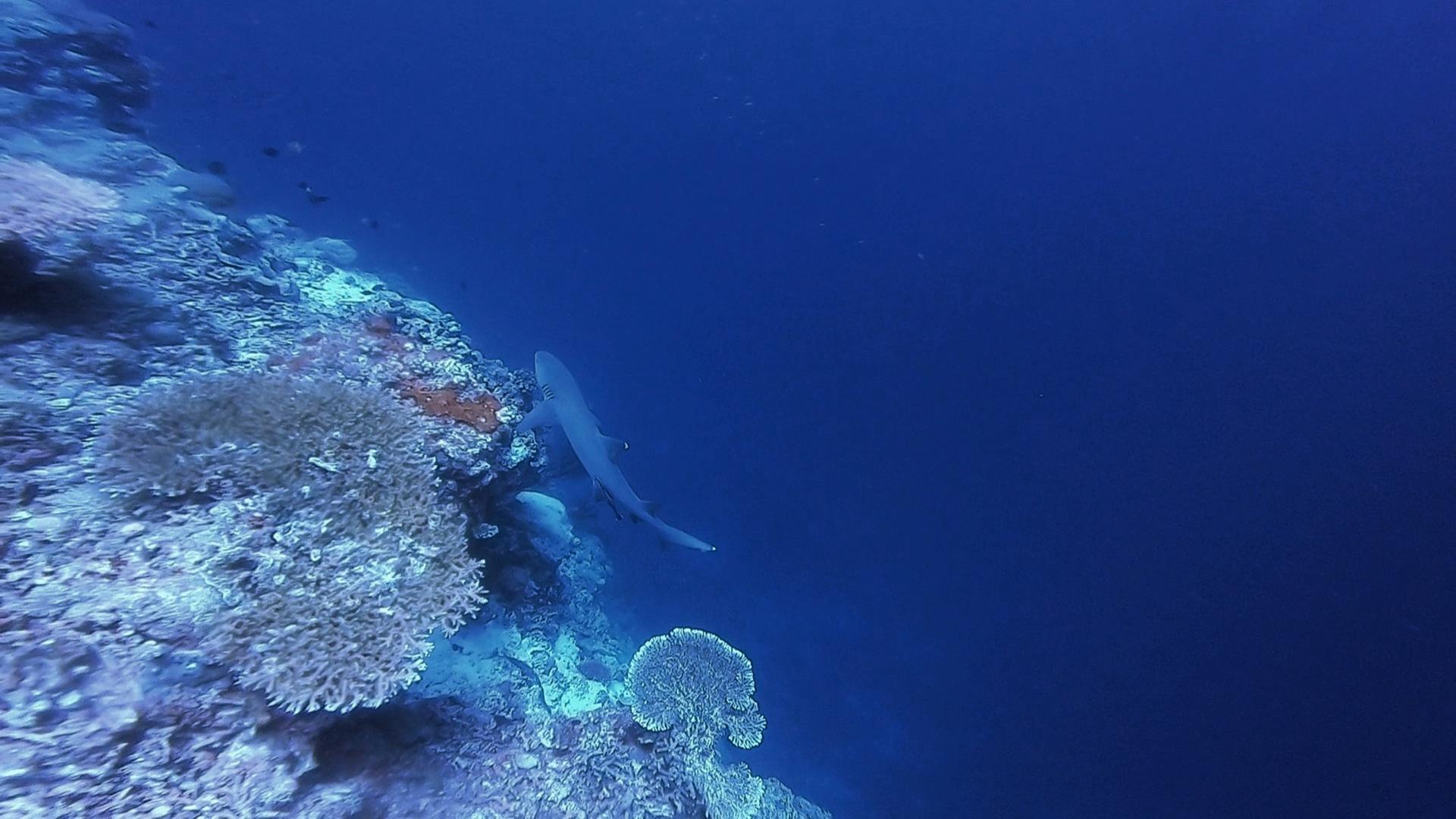
Apo Reef
The biggest reef in the Philippines sits out in the Mindoro Strait, with no one living on it but the rangers.
Apo Reef lies in the Mindoro Strait, about 28 kilometres off the west coast of Mindoro. It is the largest coral reef in the Philippines, a natural park since 1996 and a no-take zone since 2007, and its outer walls drop into deep water where reef sharks, turtles, tuna and the occasional manta work the current. It is not Apo Island off Negros, which is a different place entirely. This guide covers what the reef is, the main sites, the conditions, the best months and how you dive it from a liveaboard.
Quick answer: Apo Reef is a liveaboard wall, slope and drift dives around an offshore reef system in Philippines. Best season: December to May (dry season, calmest seas); June to October brings rain and rough crossings. Level: Intermediate to advanced: some sites are easy, but the outer walls and pinnacles have strong, changing currents. Depth: Shallow reef flats and lagoons of a few metres; walls and slopes from about 5m to well past 40m; most diving 10-30m. Typical visibility: Typically 15-30m, sometimes more in the dry season; around 20m or less in the wet months.
Facts verified November 2026
What makes Apo Reef special
Apo Reef is a roughly triangular reef system of about 34 square kilometres, with two lagoons inside it: a shallow northern one that partly dries at low tide and a deeper southern one, around 30 metres, split by a channel that opens to the west. Three small islands sit on it. Apo Island, the largest, has the lighthouse and the ranger station; Apo Menor, known locally as Binangaan, is a bare limestone rock to the east; Cayos del Bajo is a cluster of coral rock in the north. It is the largest reef in the Philippines, and the UNESCO tentative-list entry calls it the second-largest contiguous coral reef in the world.
It has been protected for a long time. Apo Reef was first set aside as a marine reserve in the Marcos era, became a natural park in 1996, it went on the UNESCO tentative list in 2006, and since 2007 it has been a no-take zone, with fishing banned across the park. That followed years of dynamite and cyanide fishing in the 1990s, and the reef that divers see today is the result of patrols and closure. The park and its buffer zone cover about 275 square kilometres, almost all of it sea.
Two Apos cause confusion. Apo Island off southern Negros, near Dumaguete, is a small marine sanctuary visited on Visayas trips. Apo Reef is a different place, far to the north-west in the Mindoro Strait, and the Apo Island on Apo Reef is a different island again.
What you'll see
The reef is known for sharks and big fish on the outer walls, and for healthy hard coral, sea fans and soft coral on the slopes. Hundreds of fish species and several hundred kinds of coral have been recorded here; published counts vary, so take any single number with caution. On a typical day you can expect:
- Whitetip and blacktip reef sharks along the walls and resting on sand patches, with grey reef sharks in some places
- Turtles, which are common around Apo Island and the walls
- Napoleon (humphead) wrasse, bumphead parrotfish, big groupers and snapper
- Tuna, jacks and barracuda off the drop-offs when the current is running
- Large gorgonian sea fans on the deeper walls, especially around Apo Menor
- Manta rays passing through at times, and scalloped hammerheads now and then on the deep northern walls; treat both as a bonus
The main dive sites
Apo Reef has dozens of named sites, and dive centres and boats name them differently. These are the ones that come up most often:
- Shark Ridge: a slope on the north-eastern side, roughly 15 to 30 metres, and the most reliable place on the reef for whitetip and blacktip reef sharks
- Apo 29 (Barracuda Hill): a deep, current-swept pinnacle with schooling barracuda and jacks; an advanced dive, timed for the current
- Binangaan (Apo Menor) drop-off: a wall dropping into deep water, with big sea fans, groupers, bumphead parrotfish and tuna off the edge
- The Apo Island walls: steep walls with good coral, turtles and sharks, with gentler water on the sheltered side
Conditions and who it's for
Apo Reef is open ocean, and conditions depend on where you drop in. The sheltered sides and the lagoon edges can be easy enough for a confident Open Water diver. The northern walls and the pinnacles are another matter: the current there can be strong and can change direction during a dive, and the walls fall well past recreational depth, so you need good buoyancy and the discipline to hold your planned depth. Expect negative or quick descents, drift dives with an SMB, and a reef hook on the exposed sites.
Visibility is usually 15 to 30 metres and can be better in the dry season. The water is about 26 to 28°C in February and March and warms to 29 or 30°C by May, so a 3mm full suit suits most divers; on four dives a day many add a hooded vest.
When to dive it
The best months are the dry season, roughly December to May, when the seas across the Mindoro Strait are calmest and the water is clearest. From about June to October the southwest monsoon brings rain, rougher crossings and lower visibility, and typhoons are possible from July to October.
There is a practical catch. Many Philippine liveaboards spend mid-March to mid-June at Tubbataha, when that park is open, so boats to Apo Reef are scarcer in those months. Trips that combine Apo Reef with the Coron wrecks or with Tubbataha tend to run either side of the Tubbataha season.
How you actually dive it
There is nowhere to stay on Apo Reef apart from the ranger station, so you either take a long day trip by boat from Sablayan or Pandan Island on the Mindoro coast, or come on a liveaboard. A liveaboard is the better way to do it: you wake up on the reef, dive the sites at the right state of the tide and fit in four dives a day.
Every visitor pays the park's environmental fee, in Philippine pesos, and the local government sets the amount, so check whether your boat includes it. Visitors must be accompanied by an accredited guide, which on a liveaboard means the boat's dive guides. The no-take rule covers everything: no fishing, no collecting, and don't touch the coral or the animals. Keep your fins off the reef and hook in only on bare rock.
Apo Reef is on our Apo Reef, Coron & Tubbataha trip: 8 nights one way from Anilao in Batangas to Puerto Princesa, sailing at the end of February, just before the Tubbataha season. It spends a full day and four dives at Apo Reef, then a day on the Coron wrecks and four days at Tubbataha. One day means four sites at most, chosen on board for the current and the weather. The trip asks for Advanced Open Water and 40 logged dives. Our Visayas trips visit Apo Island off Negros, which is a different place.
Apo Reef: common questions
What is the best season to dive Apo Reef?
December to May (dry season, calmest seas); June to October brings rain and rough crossings
What experience level do I need for Apo Reef?
Intermediate to advanced: some sites are easy, but the outer walls and pinnacles have strong, changing currents
How deep is Apo Reef?
Shallow reef flats and lagoons of a few metres; walls and slopes from about 5m to well past 40m; most diving 10-30m
What marine life will I see at Apo Reef?
Whitetip and blacktip reef sharks, turtles, Napoleon wrasse, bumphead parrotfish, tuna, jacks and barracuda; mantas and hammerheads on some days