Akitsushima
A navy flying-boat tender lies on her side in a Coron channel, with the crane that once lifted her flying boats on the sand beside her.
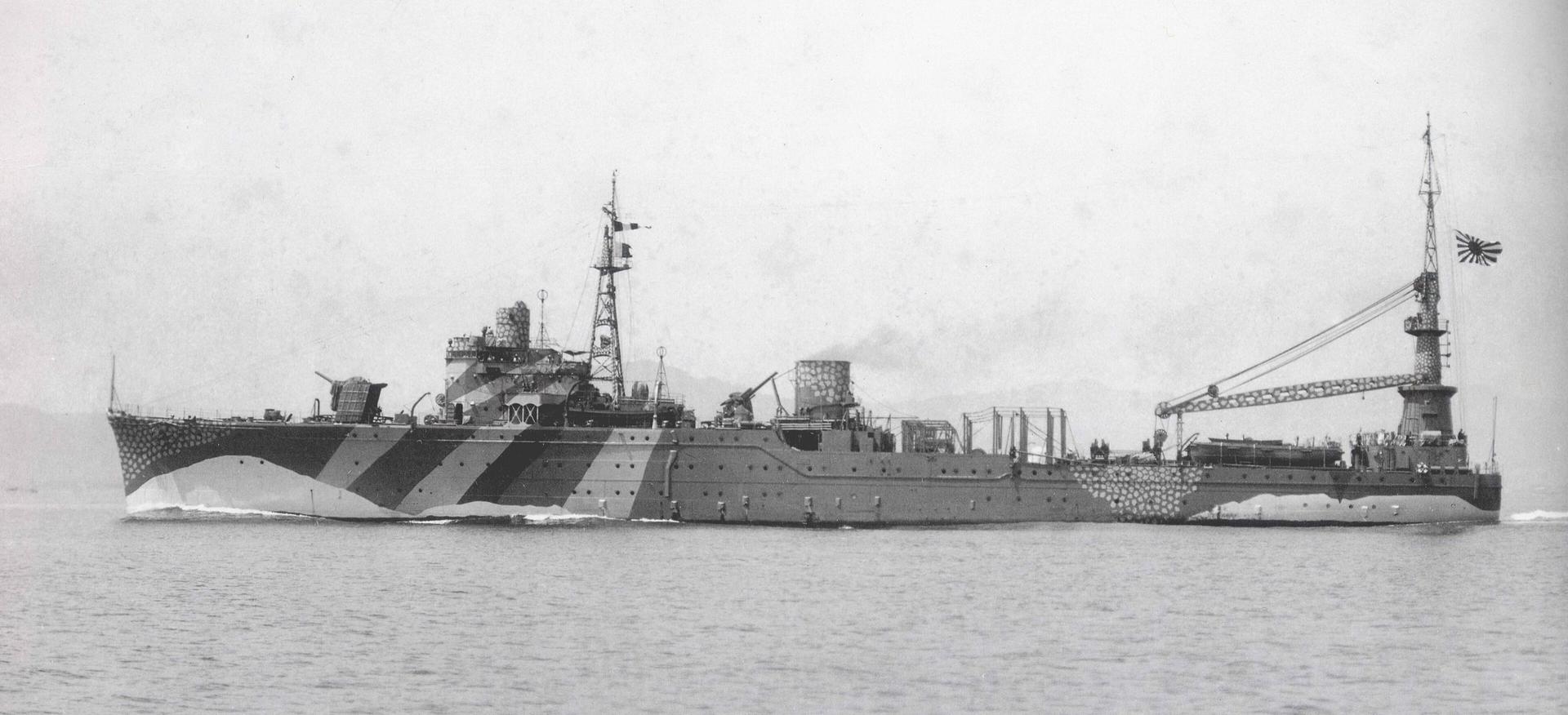
Most of the Japanese wrecks in Coron Bay were merchant ships carrying fuel and supplies. The Akitsushima was built for the navy, as a tender for its big flying boats, and US carrier aircraft sank her here on 24 September 1944, the day after she arrived. She lies on her port side between Busuanga and Culion, with her upper side at about 20 metres and the seabed in the high 30s, and her huge stern crane lies on the sand beside the hull. This guide covers her history, what you will see, the conditions, when to go and how you dive her.
Quick answer: Akitsushima is a wwii shipwreck lying on her port side; exterior dive and guided penetration in Philippines. Best season: December to April (dry season) for the calmest water; diveable year-round. Level: Advanced Open Water for the hull at 20-30m; the crane and seabed at 33-38m need deep training; the engine room and decks are overhead penetration that needs wreck training and a guide. Depth: Upper (starboard) side about 17-22m; seabed about 33-38m (sources differ); most of the dive is spent between 20 and 30m. Typical visibility: Usually 5-15m, clearest on a rising tide in the dry season; it drops after rain and around full and new moon.
Facts verified November 2026
Why the Akitsushima is special
She was built by Kawasaki at Kobe, laid down in October 1940, launched in July 1941 and completed on 29 April 1942. At 4,650 tons standard and about 115 metres long, she was a purpose-built tender for the navy's large Kawanishi flying boats, with workshops, fuel and a 35-ton crane on the stern to lift a flying boat out of the water. She carried four 127mm guns and 25mm anti-aircraft guns, and four diesel engines drove her two shafts.
She saw a lot of the Pacific war. She supported flying-boat units from Rabaul, the Shortland Islands and the Marshalls, was bombed more than once in the Solomons, and was caught at Truk in February 1944 during the American carrier raid, Operation Hailstone, where she was damaged but survived. After repairs in Japan she sailed south in convoy in September 1944, was attacked in Manila Bay on the 21st and moved on to Coron Bay, arriving on the 23rd.
The raid on Coron Bay
On the morning of 24 September 1944, aircraft from the US Navy's Task Force 38 attacked the Japanese ships sheltering in Coron Bay. The Akitsushima was hit amidships and aft, and the stern was torn open, with an explosion of aviation fuel near the stern. She listed, capsized and sank.
Most of the other big wrecks in the bay, such as the Okikawa Maru, the Olympia Maru, the Kogyo Maru and the Irako, were tankers, freighters and supply ships. That is why the Akitsushima feels different underwater: you can see she was built to fight.
What you'll see on the wreck
Most dives drop down a line to the upturned starboard side, follow the hull to the stern and finish along the deck and superstructure. The features divers come for:
- The flying-boat crane, which broke away and lies on the sand beside the stern, now a shelter for batfish, barracuda and schooling fish
- A triple 25mm anti-aircraft gun near the crane, and gun mounts on the forward deck
- The rails on the deck that the flying boat was moved along
- The radio mast and funnel area, with black coral and glassfish in the shade
- The torn stern, where the bombs and the fuel explosion nearly broke the ship in two
- For trained wreck divers with a guide: the engine room with its four diesels, and corridors on several decks, all turned through 90 degrees
A war grave
Men died on this ship. Treat the wreck as their grave: look, photograph and leave everything where it lies. Live ammunition has been reported on this wreck, so don't handle anything you find.
Conditions and who it's for
This is a deep wreck. Her upper side sits around 20 metres and the seabed is in the mid to high 30s, so even the hull is an Advanced Open Water dive with careful gas planning, and nitrox helps you get more time at 25 to 30 metres. The crane and the gun beside it lie on the sand at the deepest part of the wreck, below the 30-metre limit of most Advanced courses, so you need deep training to visit them.
The wreck has less coral than the shallower Coron wrecks but plenty of fish. Visibility is often limited, usually 5 to 15 metres, and the water around the hull can be green. Current is usually light to moderate, but it picks up when the tide runs through the channel. Inside, the ship is on her side, the silt lifts easily and the passages are damaged and confusing, so penetration needs wreck training, two lights and a guide who knows the route. The water is about 27 to 30°C, coolest in February, and a 3mm full suit is enough for most divers.
When to dive it
Coron is dived all year, but the dry season, roughly December to April, has the calmest water and the best visibility. From about June to October the southwest monsoon brings rain, run-off and rougher days, and typhoons are possible from July to October.
The tide matters as much as the month. Coron dive centres find the big wrecks inside the bay usually clearest on the rising tide and murkiest after high water, and the stronger tides around full and new moon cut the visibility.
How you dive the Akitsushima
Coron town on Busuanga has dive centres that run day trips to the wrecks, and liveaboards between Coron, Apo Reef and the Batangas coast stop here too. Either way, the boat ties onto a mooring line on the wreck and you descend along it.
One dive is enough to see the outside: down the line to the hull, along to the stern and the crane on the sand, then back up over the deck and superstructure, finishing your safety stop on the line. If you are wreck trained, a second dive with a guide can take you inside through the damage at the stern. Agree a turn point and a gas limit before you go in, and keep well off the silt.
We sell the Coron wrecks as part of our Apo Reef, Coron & Tubbataha trip: 8 nights one way from Anilao in Batangas to Puerto Princesa, sailing at the end of February, with one day and three dives on the Coron wrecks between Apo Reef and Tubbataha. The boat's plan lists the Coron wrecks rather than individual ships, and the crew choose them on the day; the Akitsushima is one of the wrecks most often dived in the bay, so if she matters to you, tell us when you book and we'll ask. The trip asks for Advanced Open Water and 40 logged dives, and going inside needs wreck training.
Akitsushima: common questions
What is the best season to dive Akitsushima?
December to April (dry season) for the calmest water; diveable year-round
What experience level do I need for Akitsushima?
Advanced Open Water for the hull at 20-30m; the crane and seabed at 33-38m need deep training; the engine room and decks are overhead penetration that needs wreck training and a guide
How deep is Akitsushima?
Upper (starboard) side about 17-22m; seabed about 33-38m (sources differ); most of the dive is spent between 20 and 30m
What marine life will I see at Akitsushima?
Batfish, barracuda and schooling fish around the crane; groupers, lionfish and scorpionfish on the hull; black coral and glassfish in the shade