What to Do Between Dives on a Liveaboard
%20-%20Large.jpg&w=1920&q=75)
Here's something nobody warns you about before your first liveaboard: you actually spend more time not diving than diving. A typical dive lasts 45-60 minutes. The surface interval between dives is one to three hours. Multiply that across a week, and you've got a lot of topside time.
That topside time can be some of the best parts of the trip. Or it can drive you up the wall if you're not prepared for it.
The Daily Rhythm
Here's what a real day looks like on a Red Sea liveaboard, so you know what you're working with:
6:15 AM — Someone bangs on your cabin door. You briefly reconsider every life choice that led here. Then you remember you're about to dive the Thistlegorm at dawn with nobody else around.
6:45 AM — Dive one. First in the water, torch on, the wreck is yours. Forty-five minutes of motorcycles, trucks, and a resident Napoleon wrasse the size of a Labrador.
7:30 AM — Surface, peel off the wetsuit, grab coffee. Breakfast on the sundeck: eggs, bread, fruit, cheese, the works. Camera batteries go on the charger. You sit in the sun and feel your core temperature come back.
9:00-10:30 AM — Surface interval. This is where the day opens up. Hour and a half of nothing scheduled. Read, nap, edit photos, argue with the German guy about whether that was an oceanic whitetip or a silky.
10:30 AM — Dive two. Different site, same reef system. Coral gardens in the shallows, a cleaning station with a queue of groupers.
11:30 AM — Surface. Rinse gear, hang wetsuit. Snack time — fruit and biscuits appear.
12:30 PM — Lunch. Everyone eats together at the big table. Rice, fish, salad, something fried. The cook is Egyptian and takes his job seriously.
1:00-3:00 PM — The long interval. This is the one that defines your topside experience. Nap in the cabin with the aircon on full blast. Or lie on the sundeck and bake. Some people journal. Some people stare at the water. The boat engine hums as you transit to the afternoon site. Nobody talks much. It's not awkward — it's just quiet in a way that land life never is.
3:00 PM — Dive three. Afternoon light, different visibility, different mood.
4:00 PM — Surface. Gear off. Shower. The day's serious diving is done.
6:30 PM — Dinner, then the choice: night dive or stargazing on the top deck. Either way, you're in bed by 9:30 because tomorrow starts at 6:15 again.
Those gaps between dives — roughly five to six hours total — are what we're talking about here.
The Classics
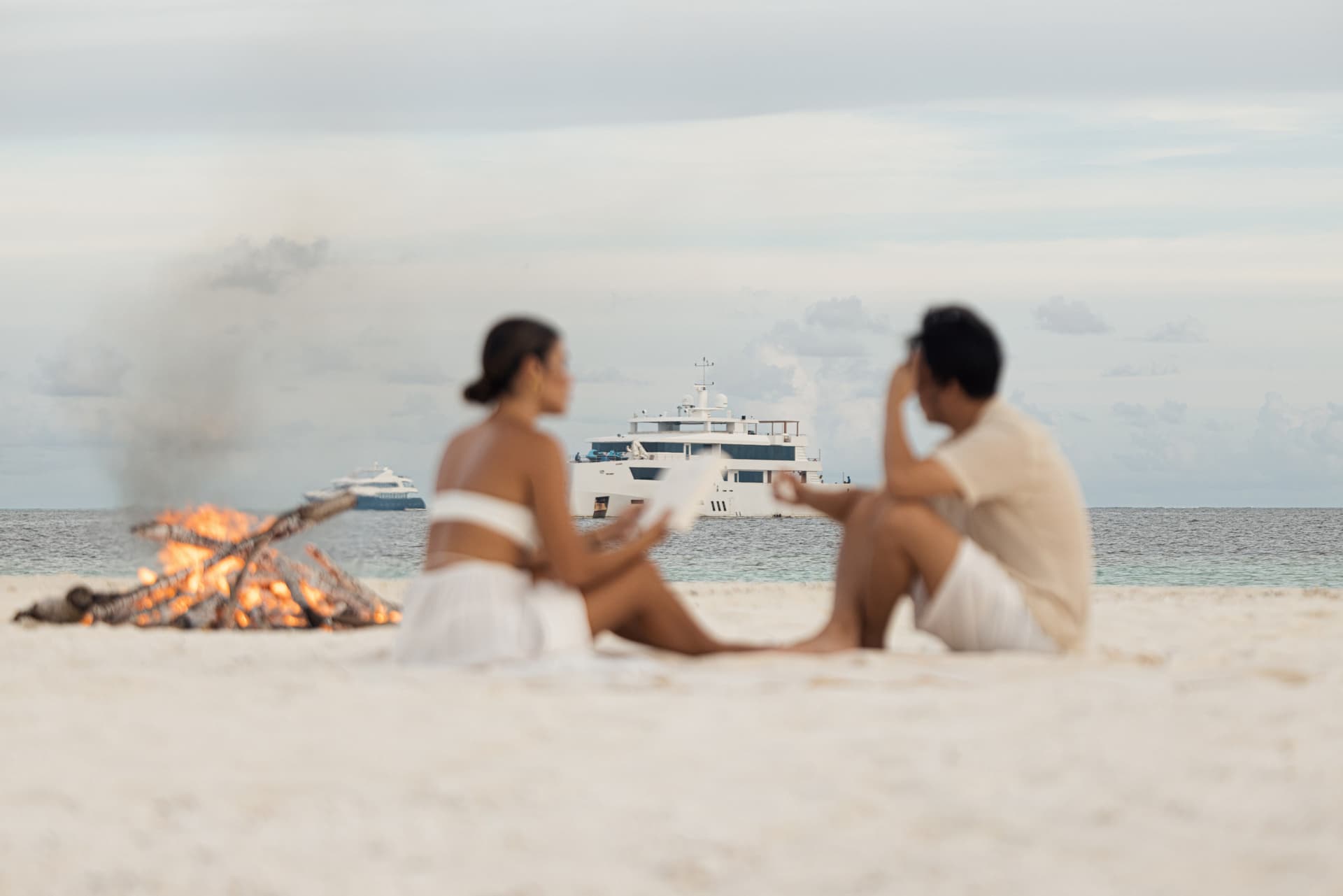
Sundeck Lounging
The main event. No traffic noise, no notifications. Sky, water, and the kind of quiet that makes you aware of how loud your normal life is.
Bring reef-safe sunscreen. The equatorial sun reflecting off water will cook you faster than you expect.
Reading
Without reliable WiFi, you'll actually finish that book you started six months ago. Load up your Kindle or bring paperbacks.
Pro tip: Waterproof case for your e-reader. One rogue wave and your library is gone.
Napping
Your body is off-gassing nitrogen, you've been up since 6 AM, and you've been physically active all day. A 30-minute nap in a sea breeze is not optional — it's maintenance.
The rocking of the boat puts you under faster than any sleep aid. The post-dive nap is non-negotiable by day three.
The Social Side
Making Friends
You're on a boat with 10-20 strangers who share your obsession. By day two, you know their dive counts, their favourite destinations, and their opinions on wetsuit rinsing technique.
Surface intervals are when these connections happen. Over coffee on the dive deck. Reviewing photos together. Arguing about whether that was a grey reef or a silvertip.
Dive Briefings and Debriefings
The pre-dive briefing is its own form of entertainment. Good dive guides are natural storytellers, and hearing about the site's highlights, hazards, and history builds genuine excitement. Post-dive debriefings — where everyone shares what they saw — are often hilarious and surprisingly educational.
The Creative Pursuits
Underwater Photography Editing
If you're shooting underwater, the surface interval is prime editing time. Most serious underwater photographers spend as much time editing as diving. Some boats have dedicated camera tables with power outlets and rinse tanks.
This is also when you learn from other photographers. The guy who's been shooting for twenty years? He's happy to show you his settings. The surface interval is a floating photography workshop.
Journaling and Logging
Keep a dive log. Not just the data — your computer handles that — but the actual experience. What you saw, what surprised you, what the visibility was like, how the current felt. In five years, you'll be grateful for those details.
Some divers keep a trip journal alongside their dive log. The combination of underwater observations and topside reflections makes for a surprisingly compelling personal narrative.
The Active Options
Snorkeling
Many liveaboard anchorages have good shallow reefs right off the boat. Reef sharks in thigh-deep water. Turtles in the shallows. Snorkeling between dives extends your water time without adding to your nitrogen loading.
Kayaking and Paddleboarding
Some boats carry kayaks or stand-up paddleboards. Paddling around a tropical anchorage at sunset is hard to beat. Not every boat has these — check before you book if this matters to you.
Swimming
You're anchored in warm, clear water. Jump off the back of the boat. Float. Look at the sky. Sometimes the simplest option is the right one.
The Evening Hours
Stargazing
In the middle of the ocean, with zero light pollution, the Milky Way is not a faint smudge — it's a thick band across the entire sky. You'll see satellites tracking across it every few minutes, and if you're lucky, bioluminescence in the water below at the same time.
Night Photography
If you brought a tripod: star trails over the ocean, the boat's navigation lights reflected in still water, lightning on the horizon. A liveaboard at night is a solid platform for long exposures.
Conversation
After dinner, with nowhere to go and nothing to scroll, people actually talk. Long, rambling conversations about diving, travel, and life. Some solid friendships start on liveaboard back decks at 9pm.
What to Bring for Between-Dive Time
- Books or e-reader — your most important non-dive item
- Reef-safe sunscreen — apply liberally and often
- A good hat — the sundeck is unforgiving
- Camera — not just for underwater, the topside moments are worth capturing too
- Journal and pen — old school, and that's the point
- A light layer — evenings on the ocean can be cooler than you'd expect
- Card games or a small board game — instant socialiser
The Real Secret
The time between dives isn't filler. It's where the trip shifts from a list of dives into an actual experience. Learn to enjoy the slow parts and the whole week gets better.
Planning your first liveaboard and wondering what the daily experience is really like? The Faneca team has the answers — and plenty of book recommendations.
- First-Time Liveaboard: What to Expect Day by Day — The full day-by-day breakdown of life on board
- Liveaboard for Non-Divers: Can My Partner Join? — What non-divers can do on a liveaboard
- Solo Diver's Guide to Liveaboard Travel — Making friends and socialising between dives
Related Articles
The Complete Liveaboard Packing Guide
What to bring, what to leave behind, and the gear essentials that experienced liveaboard divers swear by.
First-Time Liveaboard: What to Expect Day by Day
Never done a liveaboard? Here's the inside scoop on the schedule, the meals, the diving, and the delightful chaos.