Crystal Rock
A pinnacle that breaks the surface at low tide, wrapped in sharks and swept by current you can lean into.
Crystal Rock is one of north Komodo's signature pinnacle dives, and one of the most rewarding you can do with the right skill set. Diving Crystal Rock means dropping onto a coral-blanketed seamount in blue water, hooking in on the upcurrent edge, and watching grey reef sharks and trevally hold station in the flow beside you. It is not a beginner site, but for a confident diver on a Komodo liveaboard it delivers the kind of high-voltage reef action the region is famous for.
Quick answer: Crystal Rock is a current-swept pinnacle / seamount, dived as a hook-in and drift in Komodo. Best season: Dry season April-November; peak visibility July-September. Level: Advanced — AOW minimum with proven current and negative-entry experience. Depth: Pinnacle tops ~3m below the surface; main dive 18-25m, walls dropping past 30-40m. Typical visibility: Typically 25-30m, regularly 30-40m in the dry season.
Facts verified September 2026
What makes Crystal Rock special
Crystal Rock is a submerged mountain. The summit sits only about three metres down and pokes above the surface at low tide, while the flanks fall away in steep slopes and walls that run past 30 metres into the blue. A central saddle links two peaks, and it is this compact, exposed structure — sitting out in open water in the channel north of Gili Lawa Darat — that makes the site tick. Nutrient-rich current slams into the rock, wraps around it, and feeds everything that lives here.
The result is a pinnacle that genuinely glows: giant sea fans, barrel sponges and soft coral in oranges and purples plaster the upper slopes, with schooling anthias shimmering over the top. Because it is oceanic and current-fed, Crystal Rock stacks reef fish and pelagics in the same frame, which is exactly why it is a fixture on almost every serious Komodo liveaboard itinerary. Its bigger neighbour Castle Rock sits a short hop away, and the two are usually dived back to back.
What you'll see
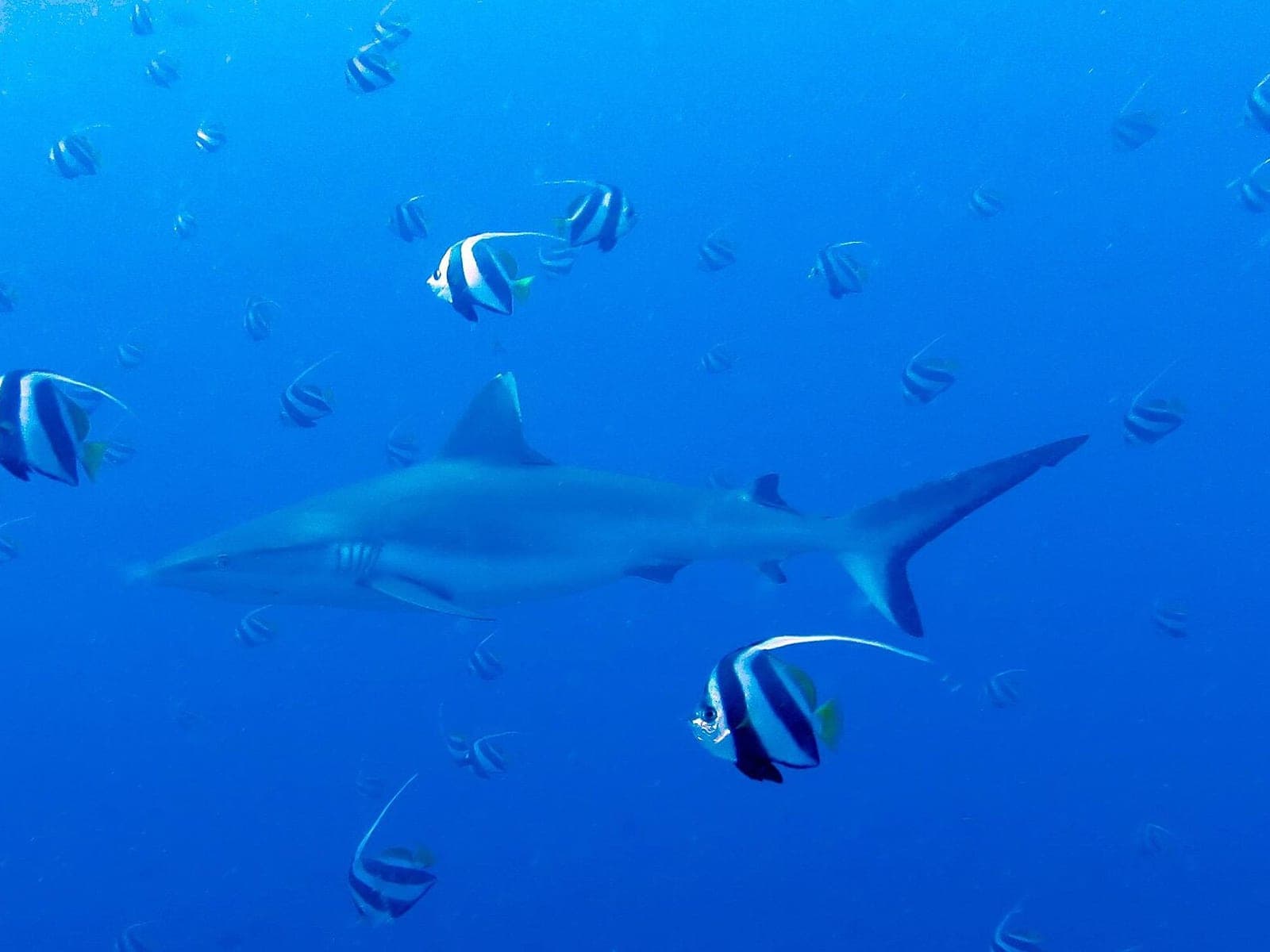
Sharks are the headline. Grey reef sharks patrol the deeper edges and whitetips rest under table corals around 15-20 metres, and on a good drift you can count double figures over a single dive. The current also pulls in the fast crowd — expect walls of fusiliers pursued by giant trevally, dogtooth tuna, Spanish mackerel and the occasional barracuda school.
Look wider into the blue for spotted eagle rays cruising past, and in peak season an oceanic manta occasionally passes through, though this is a bonus, not a promise — Komodo's reliable manta encounters happen at dedicated cleaning stations further south, not here. When the current eases, drop your eyes to the slopes for the reef supporting cast and some worthwhile macro.
- Grey reef and whitetip reef sharks, plus occasional blacktips in the shallows
- Giant trevally, dogtooth tuna, Spanish mackerel and barracuda hunting the fusilier schools
- Napoleon wrasse, yellow-ribbon sweetlips, bannerfish and dense anthias clouds
- Spotted eagle rays, and rare passing oceanic mantas in peak season
- Macro on the slopes when the flow drops: pygmy seahorses, nudibranchs, the odd frogfish
Conditions and who it's for
Be honest with yourself about this one. Crystal Rock is an advanced dive. Current runs 2-4 knots at peak flow and accelerates sharply as it squeezes around the pinnacle's sharp structure, and it builds hardest around the new and full moon. You need to be comfortable with a negative entry — dropping straight down off the tender so you reach the rock before the current sweeps you off it — and comfortable holding position in moving water.
We ask for Advanced Open Water as a minimum, with genuine current experience behind it, not just the certification card. Divers who are relaxed on gas, tidy with buoyancy and calm in surge will love it. Divers still working on those fundamentals will find it stressful and burn air fast. If that is you, build up on Komodo's gentler reefs first — the site will still be here, and it rewards experience.
When to dive it
Crystal Rock is a north Komodo site, and the north is at its best in the dry season from April to November. That is when the winds settle, the water clears and visibility routinely sits at 25-30 metres, opening up to a glorious 30-40 metres on the best days. July, August and September are the pick for sheer clarity and that deep-blue backdrop the photographers chase.
Water temperature hovers around a comfortable 28C through the middle of the year, though the same upwellings that feed the site can push cooler, cloudier water across it without warning, so a decent exposure suit earns its keep. In the December-March wet season the exposed north can get blown out, and liveaboards often reroute to the more sheltered central and southern sites — so if Crystal Rock is a must-dive for you, book your trip inside the dry-season window.
How you actually dive it
The dive is planned around the tide. Your guide will time the entry for slack or a manageable falling current, because trying to muscle onto the rock at full flow is a losing game. You will roll into a negative entry, drop fast to 15-20 metres on the upcurrent side, and get onto the reef before the flow can carry you past.
From there it is a hook-in dive: deploy a reef hook into dead rock or rubble — never live coral — clip off, and hang in the current to watch the sharks and pelagics work the point. When you are ready to move, unhook and let the flow carry you around and over the saddle, dropping to explore the slopes as the current relaxes on the lee side, then send up an SMB for a blue-water ascent and safety stop. Bring the reef hook, keep your computer honest given the depth and exertion, and stay close to your guide and buddy — on a site like this, drifting off alone is the one mistake that really matters.
Faneca dives Crystal Rock on our north Komodo liveaboard routes aboard the Blue Pearl and iLike, usually pairing it with neighbouring Castle Rock; because it is an exposed dry-season site, we schedule it for the April-November window and swap in sheltered central-Komodo dives if conditions in the north turn against us.
Crystal Rock: common questions
What is the best season to dive Crystal Rock?
Dry season April-November; peak visibility July-September
What experience level do I need for Crystal Rock?
Advanced — AOW minimum with proven current and negative-entry experience
How deep is Crystal Rock?
Pinnacle tops ~3m below the surface; main dive 18-25m, walls dropping past 30-40m
What marine life will I see at Crystal Rock?
Grey reef and whitetip sharks, giant trevally, dogtooth tuna, Spanish mackerel, barracuda, fusiliers, eagle rays, occasional oceanic manta; Napoleon wrasse, sweetlips, plus macro on the slopes
