Thailand Similans Trip Report: 5 Days on The Junk
Route: Tab Lamu — Similan Islands — Koh Bon — Koh Tachai — Richelieu Rock — Tab Lamu
Dates: March 8–12, 2026
Boat: The Junk
Conditions: 29°C water, 15–25m visibility, calm seas
Total dives: 14
The Similan Islands and Richelieu Rock are among Southeast Asia's most accessible liveaboard destinations, and The Junk — a restored traditional wooden sailing vessel — runs short 4-night itineraries out of Tab Lamu pier north of Khao Lak. This is a trip report from five days aboard in March.
The Boat
The Junk lives up to her name in the most charming way possible. She is a wooden sailing vessel, converted for diving in 2012 and still running the Similans route every week. 18 guests across 9 cabins, all below deck with shared bathrooms, no air conditioning in the cabins — and somehow, none of that matters once you're on board.
The main deck is where the trip actually happens. A shaded saloon for meals and briefings, an open dive platform with tank racks and rinse bins, a bow area where guests gather before dawn dives and again at sunset. The cabins are for sleeping; the deck is for everything else. If you book this boat, you will spend almost no time in your cabin, and that's by design.
This is not a steel liveaboard and doesn't pretend to be one. It is a wooden boat with character, run by a Thai crew who have been doing it for years, at a price point that's genuinely hard to match anywhere in Southeast Asia (around EUR 570 for 4 nights, 14 dives, all meals included). The trade-offs are real — shared bathrooms, no aircon, basic mattresses — but they're exactly what you'd expect, and they're priced in.
The Crossing and First Dives
Guests board at Tab Lamu pier, a two-hour transfer from Phuket airport. By mid-afternoon on Day 1 we were underway, and the first dive was at Christmas Point on Similan Island 9 — a sloping reef of boulders and fan coral with a few gentle swim-throughs. Visibility about 18 metres, water temperature 29°C, just enough drift current to keep things interesting without working for it. An honest check dive and a good introduction to the Similans.
The Similan Islands themselves offer two styles of diving: boulder diving on the western side (Christmas Point, Elephant Head Rock, West of Eden) and easier coral diving on the east. Day 1 typically covers three or four dives across both before the boat moves north overnight.
Koh Bon
Koh Bon is the first stop north of the Similans and one of the two main sites for reef manta encounters in the Andaman Sea. The west ridge descends from the surface to about 40 metres and includes a cleaning station at around 16 metres where reef mantas are known to arrive during peak season.
Our first dive at Koh Bon produced no manta but solid reef diving — good coral, a gentle current along the ridge, and a large marble ray half-buried in the sand at 18 metres. The second dive was where things changed.
We dropped in on the same ridge, drifted south in the current, and at about the 14-minute mark the dive guide pointed up. A reef manta, roughly 3-metre wingspan, was gliding along the ridge directly toward the cleaning station. The group settled on the sand at 16 metres and watched her circle the station three times, hovering while small wrasses picked parasites off her gill plates. She stayed for around 12 minutes.
Standard manta etiquette on Koh Bon — which the boat briefed clearly before every dive there — is to stay low, stay still, and under no circumstances rise above or chase the animal. Everyone held position. It was one of those encounters that makes you remember why you got certified in the first place.
Mantas at Koh Bon are not guaranteed, but during peak season (February to April) the cleaning station sees regular visits. The Junk's crew knows which dives of the day give you the best shot.
Koh Tachai Pinnacle
Koh Tachai Pinnacle is a submerged granite tower rising from 30 metres to about 12 metres below the surface. Small enough to circle in under five minutes, but the current funnels nutrients across it and concentrates marine life in a way that rewards anyone who makes the effort to get there.
The current was strong on our first attempt — the briefing estimated 2 knots, and the briefing was right. We did a negative entry, dropped immediately, and reached the lee of the pinnacle in about 30 seconds. Once in the lee, conditions calmed. Soft coral carpeted the rock from top to bottom. Barracuda cruised overhead. A hawksbill turtle was wedged into a coral head at 22 metres, calmly eating sponge and completely indifferent to our presence. At the base, around 26 metres, a school of chevron barracuda formed a living wall.
Visibility at Koh Tachai is lower than elsewhere on the route — about 15 metres on our dive — because the same plankton that drives the marine life also clouds the water. That trade-off is fundamental to diving in the Andaman Sea: the green water means food, and the food means life, and the life means there's always something to look at even when you can't see the far end of the reef.
Koh Tachai Pinnacle is an AOW-level dive. If you're not comfortable with current, ask to sit it out — the boat runs an alternative easier dive for guests who prefer calmer conditions.
Richelieu Rock
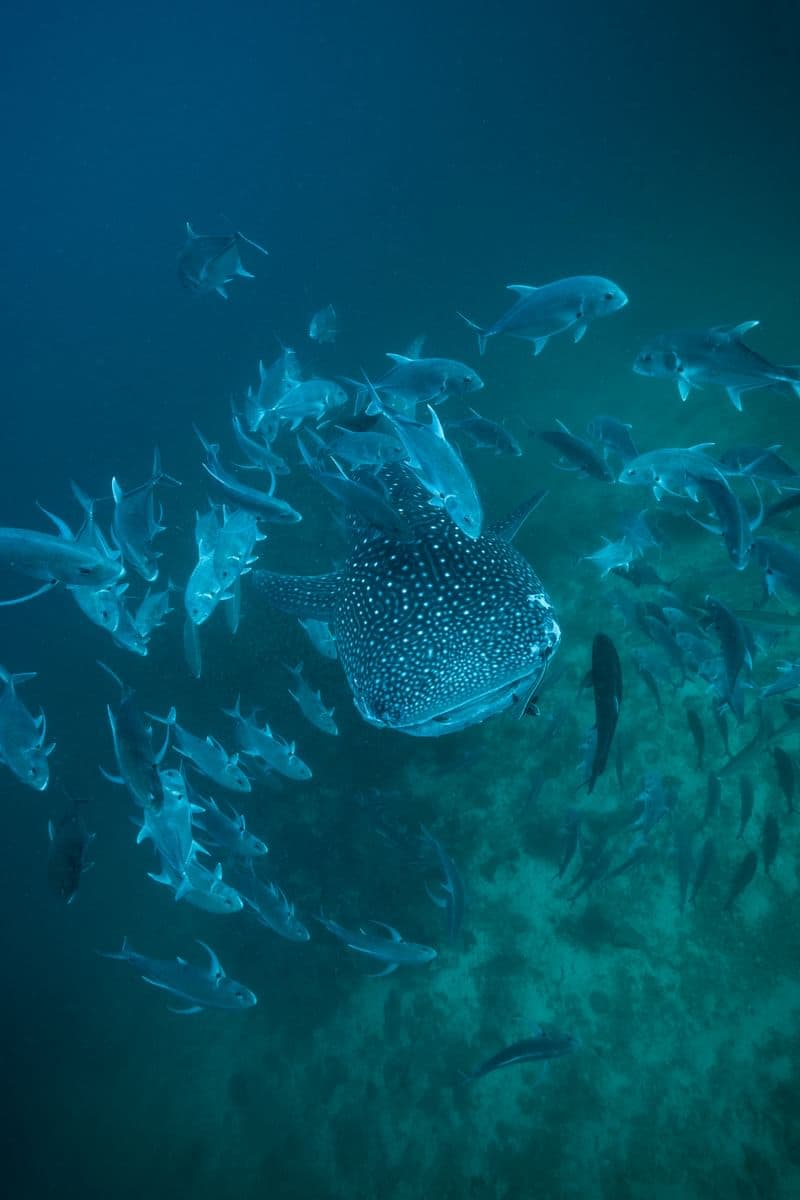
Richelieu Rock is the site that puts the Similans on most divers' lists in the first place. A horseshoe-shaped pinnacle covered in purple and red soft coral, ranked among Thailand's top dive sites, and the one site on the whole route where whale sharks occasionally show up between February and April.
We did two dives at Richelieu. No whale shark. That's the reality of the site — sightings are a lottery, and you should never book a trip to Richelieu expecting one. What you should expect is exceptional macro diving and some of the most colourful soft coral coverage in Thailand.
The first dive focused on macro. The guides found multiple tiger tail seahorses clinging to sea fans at 18 metres — tiny, perfectly camouflaged, the kind of creature you'd swim past a hundred times without ever noticing unless someone pointed at the exact spot. We saw four on that one dive. Also nudibranchs, small crustaceans tucked into coral crevices, and a cuttlefish in five metres of water on the top of the rock with its skin flickering through colour patterns no camera has ever properly captured.
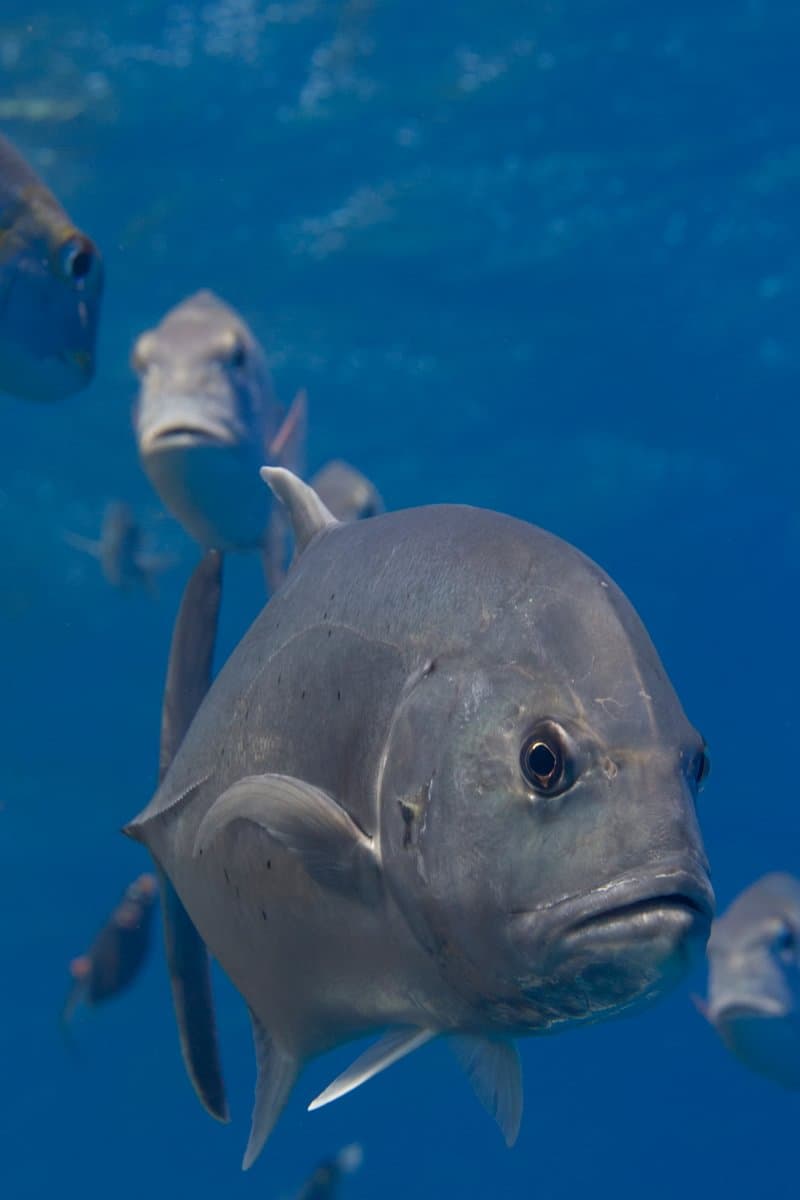
The second dive was a wide-angle circuit of the rock — schools of trevally, thousands of bigeye snapper turning in unison, and the soft coral visible in every direction. This is the dive the postcards are from.
The Service
The Junk's crew is entirely Thai, seven staff from the coastal villages around Khao Lak, with a divemaster team that's been on the boat for years. Briefings were clear and practical — current direction, recall signals, entry points, expected marine life, and what to do if things went sideways. No performance, no drama, just the information you needed.
Guide ratio was approximately 1:5, and the groups were organised by experience level rather than language. That's the right call for a boat with mixed international guests — keeps the strong divers together and gives the less experienced guests the attention they deserve.
The food is worth a paragraph of its own. The boat's chef cooks every meal on a small galley at the back of the boat — pad thai, green curry, tom yum soup, fried rice, fresh fish every day, fruit laid out continuously between dives. It's not fancy. It is some of the best food you'll eat on a liveaboard, and the portions are generous. Whoever learned the chef his pad thai clearly took it seriously.
Practical Details
- Trip cost: Approximately EUR 570 for 4 days, 4 nights, all meals, 14 dives
- Max depth: 26 metres (Koh Tachai Pinnacle)
- Water temperature: 28–30°C year-round during season
- Visibility: 12–25 metres, site dependent
- Exposure protection: 3mm shorty or lycra suit is plenty in March
- Experience level: AOW recommended, particularly for Koh Tachai
- Getting there: Fly to Phuket (HKT), 2-hour road transfer to Tab Lamu pier
- Best season: February to April for manta encounters and the whale shark lottery
The Bottom Line
The Junk offers a specific type of Similans liveaboard experience: traditional wooden boat, local Thai crew, short 4-night itineraries at a price point that's hard to argue with. The diving is exactly what the Similans are known for — soft coral pinnacles, reliable manta encounters at Koh Bon during peak season, and the macro diversity of Richelieu Rock. The crew is warm and competent. The food is better than it has any right to be.
For divers who want the Similans on a budget, who prefer character and local operations to steel-hull comfort, and who don't mind basic cabins in exchange for the value and the traditional wooden-boat experience, this is the trip. For those who need air conditioning and ensuite bathrooms, a larger steel liveaboard on the same route will serve you better — you'll pay roughly double for the privilege.