Diving Over 50: What Changes and What Doesn't
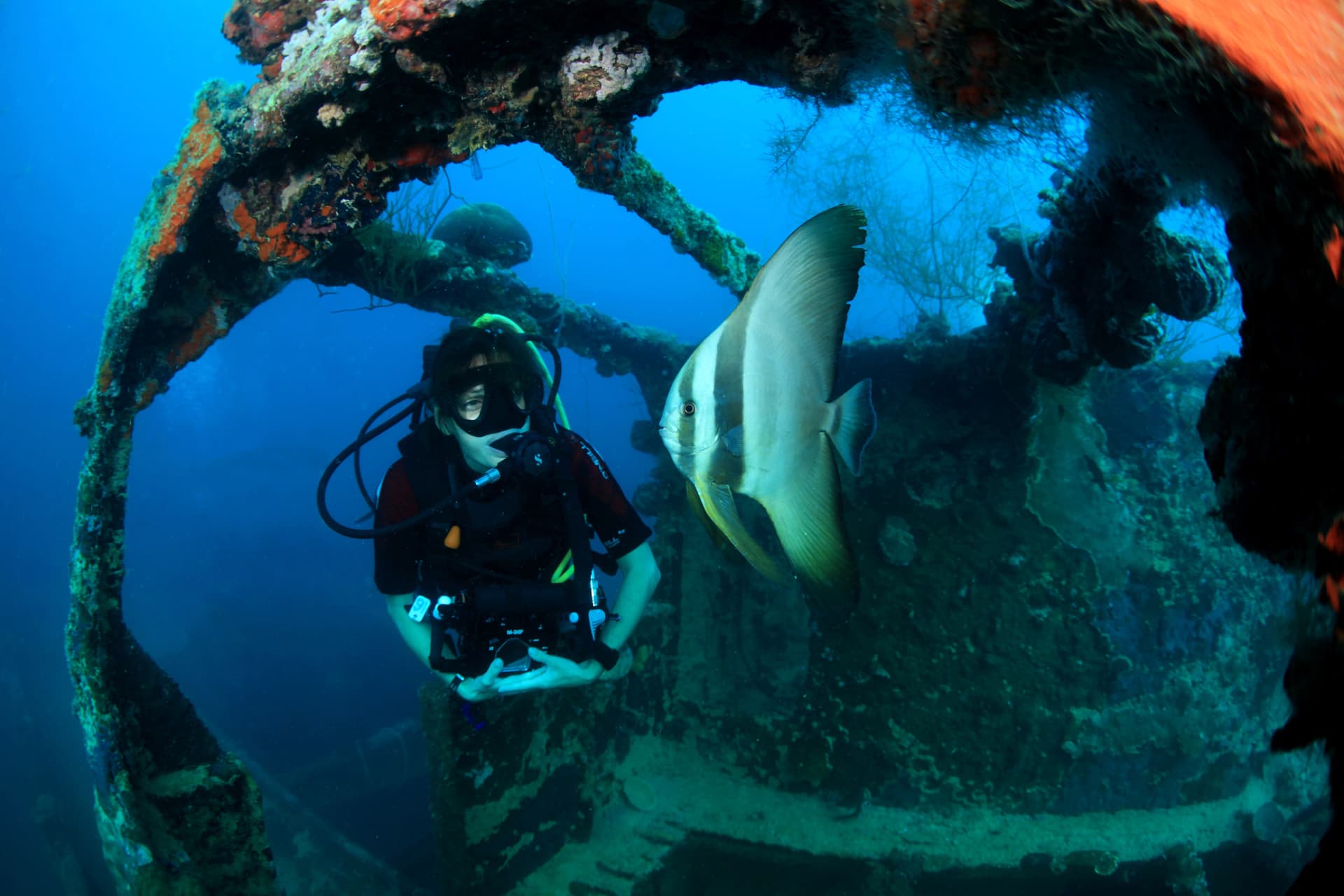
Let's skip the patronizing intro. You've been diving longer than some dive guides have been alive. You know what a thermocline feels like. You can set up your BCD blindfolded. The question isn't whether you can still dive — it's how diving changes as your body does, and what adjustments keep you in the water for another 20 years.
The Things That Actually Change
Equalization Gets Slower
This is the one almost every diver over 50 notices first. Your Eustachian tubes lose elasticity. The descent that used to take 30 seconds now takes two minutes. That's not a problem — it's an adaptation.
What works:
- Start equalizing on the surface, before you descend. Every three metres on the way down.
- Descend feet-first along a line. Free descents into blue water put more pressure on your ears faster.
- If one ear won't clear, stop. Ascend a metre. Try again. Forcing it at 52 is a much worse idea than forcing it at 32 — your tissue doesn't bounce back the same way.
- Consider a longer-acting decongestant on dive days if you're prone to sinus issues. Talk to your dive doctor, not Google.
DCS Risk Increases — and This Isn't Negotiable
After 50, your body off-gasses nitrogen more slowly. Circulation isn't what it was. The statistical risk of decompression sickness goes up, and this isn't something you can will away with good vibes and hydration.
What that means in practice:
- Stay well within your computer's limits. Ending a dive with 3 minutes of NDL is cutting it too close.
- Add a safety margin. Many dive doctors recommend treating yourself as one level more conservative on your computer settings.
- Surface intervals matter more. That 45-minute gap between dives? Make it 60.
- Hydration is genuinely important. Your blood viscosity increases with age, and dehydration makes it worse. Drink water between every dive. Coffee doesn't count.
- Skip the fourth dive of the day. Three good dives beat four risky ones.
Fitness Matters More Than Age
Here's the thing nobody wants to say: a fit 55-year-old will out-dive an unfit 35-year-old every single time. But fitness after 50 requires actual work, not just "I walk to the shops."
If you can climb two flights of stairs carrying 20kg without getting winded, you're in good shape for diving. If you can't, that's the thing to fix — not your certification level.
Core strength prevents back injuries when gearing up. Cardiovascular fitness affects your air consumption and your body's ability to handle nitrogen loading. Flexibility helps you reach your valves and kick efficiently.
Swimming 20 minutes three times a week does more for your diving than any equipment upgrade.
Medical Clearance: Just Do It
After 50, you need a dive medical every year. Not because someone decided to be annoying, but because things change fast. Blood pressure creeps up. Cardiac events happen without warning. Medication interactions with pressure are real.
What the Medical Covers
A proper dive medical for over-50s includes:
- Resting ECG (some doctors will do a stress ECG if you have risk factors)
- Lung function test
- Blood pressure check
- Review of all medications — some beta-blockers, antihistamines, and diabetes meds affect diving safety
- Ear, nose, and throat check
- Discussion of any orthopaedic issues that affect mobility in water
In the EU, a dive medical costs between EUR 60-150. In the UK, around GBP 50-80 through a UKDMC-registered doctor.
The Medication Question
Beta-blockers can mask cardiac symptoms underwater. Some statins cause muscle cramping. Certain blood thinners increase barotrauma bleeding risk. Diabetes medications need careful management around dive profiles.
None of these necessarily stop you diving. But your dive doctor needs to know about all of them. "I forgot to mention it" isn't a plan.
What Doesn't Change (and Actually Gets Better)
Air Consumption
Experienced divers breathe less. Full stop. A 55-year-old with 500 dives will use less air than a 28-year-old with 50 dives. You're calmer, you move less, you don't fin like you're trying to outswim the current.
At 50+, it's normal to surface with 80-100 bar while younger divers are at 50. Enjoy it.
Dive Judgment
You know when to thumb a dive. You know what surge looks like before you get caught in it. You recognise the signs of narcosis — in yourself and others. You don't chase things. You wait for them to come to you.
This is worth more than any physical advantage.
Patience With Marine Life
Younger divers fin past the octopus hiding under the coral because they're chasing the reef shark. You stop. You wait. You see things nobody else does. Twenty minutes on a single coral head at 12 metres is often better diving than charging along a wall at 30.
Choosing the Right Boat
Not all liveaboards are equal when you're over 50. Here's what to look for:
Easy water access: A dive platform at water level with a good ladder beats a high gunwale you have to swing a leg over. Ask about this before you book. Emperor boats in the Red Sea and the Damai in Indonesia both have excellent low platforms.
Gear handling: Some boats carry your gear to the platform and set it up. Others expect you to haul a 20kg rig across a rocking deck. The former is worth paying extra for.
Dive pace: Boats doing four dives a day plus a night dive are built for 30-year-olds on holiday. Three dives a day with proper surface intervals is the right pace. Boats in the Maldives and Palau tend to run at a more relaxed schedule.
Cabin access: Lower deck cabins on a boat with steep stairs can be tough on knees. Ask about upper deck cabin availability.
Nitrox availability: At 50+, diving on enriched air (32% or 36%) gives you a genuinely useful safety margin. Most serious liveaboards include nitrox, but some charge extra — EUR 7-10 per fill or EUR 150-200 for the week. Worth every cent.
Travel Insurance After 50
Standard travel insurance often has a diving depth limit of 18 metres, which is useless for liveaboard diving. After 50, finding good coverage requires a bit more effort.
DAN Europe covers divers of all ages with no upper limit. Annual membership with dive accident coverage runs about EUR 65-115 depending on the plan. This covers hyperbaric treatment, medical evacuation, and repatriation.
For travel insurance, check the maximum age clause. Some policies exclude divers over 65 or charge significant premiums after 70. Staysure, AllClear, and Battleface all offer 50+ dive travel cover, but read the depth limits and exclusion clauses carefully.
The Bottom Line
Diving after 50 isn't about pretending nothing has changed. It's about being smart enough to adjust without giving up. Slower descents, conservative profiles, proper fitness, annual medicals, the right boat — these aren't concessions. They're the reason you'll still be diving at 70 while the reckless ones stopped at 45.
You've earned every dive you take. You've paid for it in experience, in courses, in gear, in flights to remote places. Nobody gets to tell you it's time to stop — but your body does get to tell you it's time to adapt.
Listen to it. Then go diving.
Related Articles
The Complete Liveaboard Packing Guide
What to bring, what to leave behind, and the gear essentials that experienced liveaboard divers swear by.
First-Time Liveaboard: What to Expect Day by Day
Never done a liveaboard? Here's the inside scoop on the schedule, the meals, the diving, and the delightful chaos.